

I’m interested in how things grow, erode, entangle. The logic of nature—roots, skins, veins—is more honest to me than imposed symmetry.
– Gilang Fradika
This is the second edition of Artist Insights for Connecting, an exhibition exploring the many ways connection can emerge between people, ideas, materials, and environments. In this conversation, Gilang Fradika reflects on his layered, organic paintings, how they blur structure and sensation, realism and metaphor, and the quiet forces that shape his visual language. Framed by the memories, textures, and instincts behind his process, we ask: What inner worlds shape the way an artist sees, feels, and creates?
 Gilang Fradika (b. 1988, Majenang, Indonesia) is an artist based in Yogyakarta whose paintings bring together natural forms, pop culture imagery, and dreamlike landscapes. Trained in Graphic Arts at Yogyakarta State University, he builds his works through layered compositions that often feel both familiar and surreal by mixing plant anatomy, human figures, and symbols from everyday life. By blending precise detail with imaginative scenes, he invites viewers to explore different timelines, perspectives, and emotional states within a single frame. His work has been shown in exhibitions across Indonesia and Southeast Asia, including solo shows at RUCI Art Space (Jakarta) and Mizuma Gallery (Singapore), as well as group shows like ARTJOG and international art fairs.
___________
Artist Statement
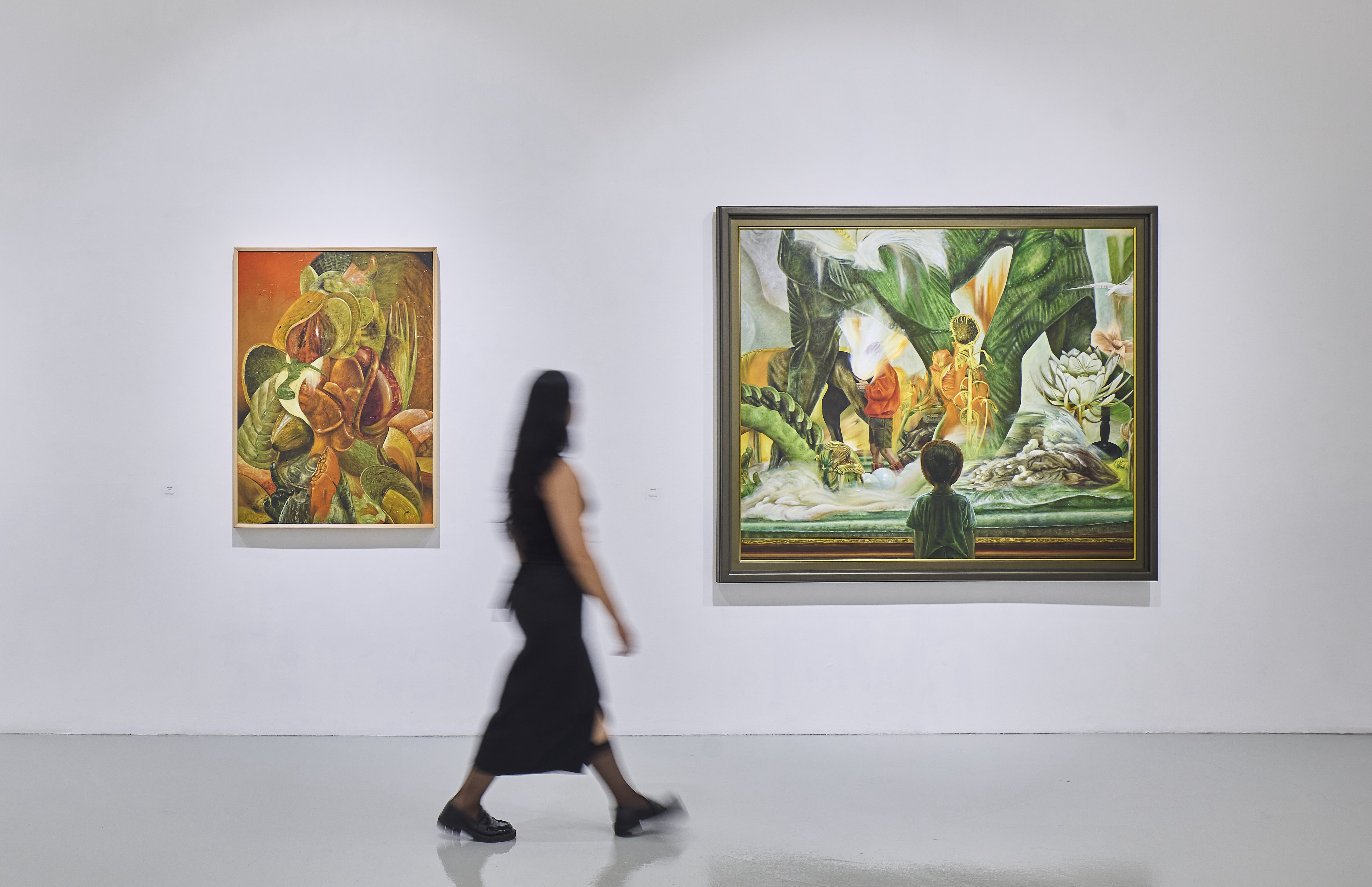
Luruh is my attempt to create a representational space for what is usually hidden: the inner residues that cannot be put to words, yet urgently need to be revealed. It is a living space, growing, and refusing to be tamed by a final form.
It represents an internal field where chaotic social experiences transform into organic, dense, and complex
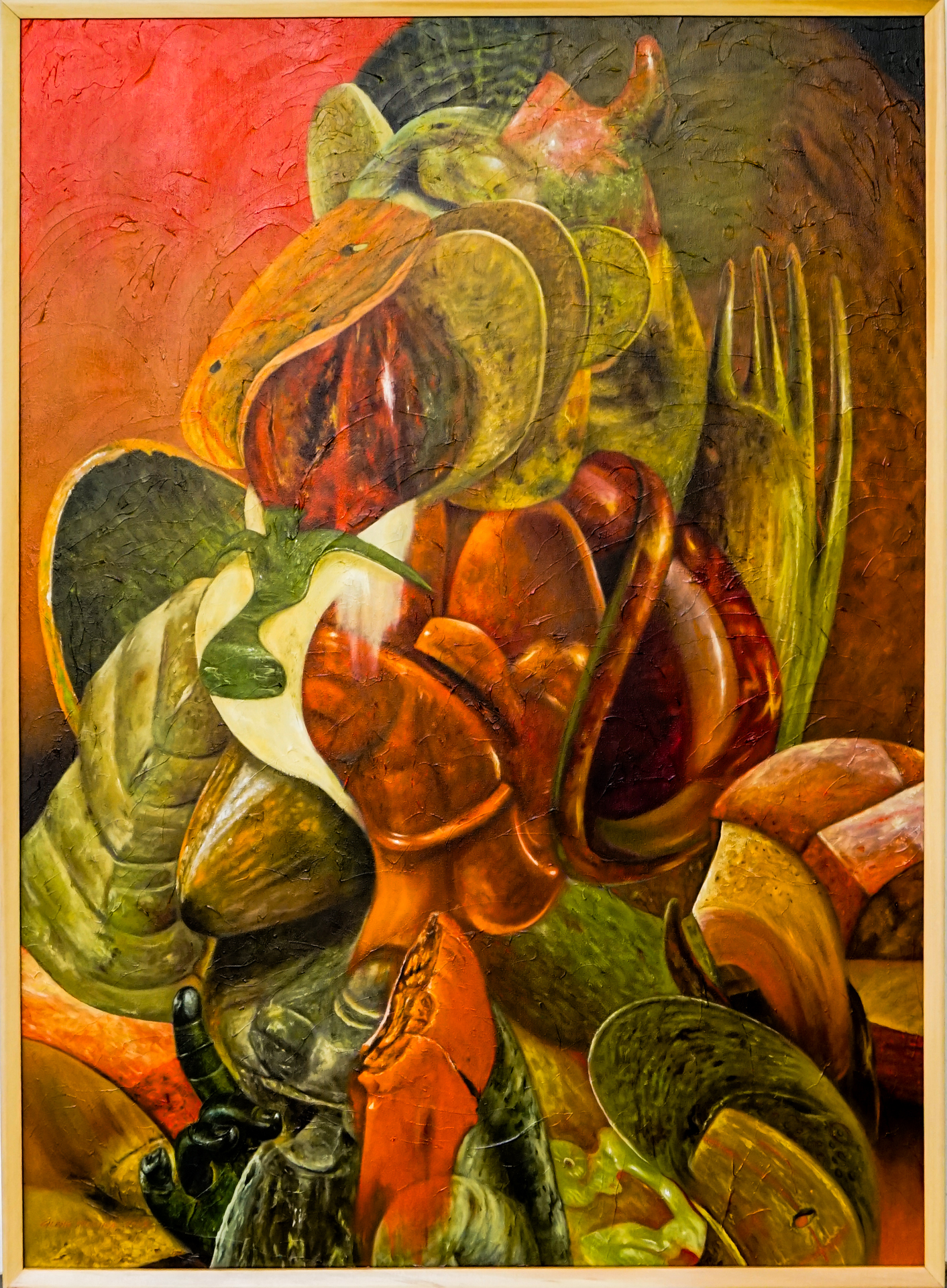
Gilang Fradika, Luruh, 2025
visual forms. A space where internal responses grow autonomously, reflective and at the same time subversive toward the dominance of singular forms and meanings. It is a reflection of how a chaotic world does not stop at the skin’s surface, but seeps into the deepest emotional and mental layers. Like living organisms within, they continue to grow, merge, and at times devour one another.
I use an abstract-figurative approach to free the narrative from the constraints of form. It is precisely in distortion and deformation that I find the most honest space to convey feelings. The sharp colours, intense textures, and complex visual layering are not merely aesthetic choices, but metaphors for a torn social body and a soul unable to find verbal articulation. It is a reflection of how a chaotic world does not stop at the skin’s surface, but seeps into the deepest emotional and mental layers. Like living organisms within, they continue to grow, merge, and at times devour one another. I want to create a place where these forms can speak for themselves to anyone willing to be still in front of them.
—
Suluk is an inward journey.

Gilang Fradika, Suluk, 2025
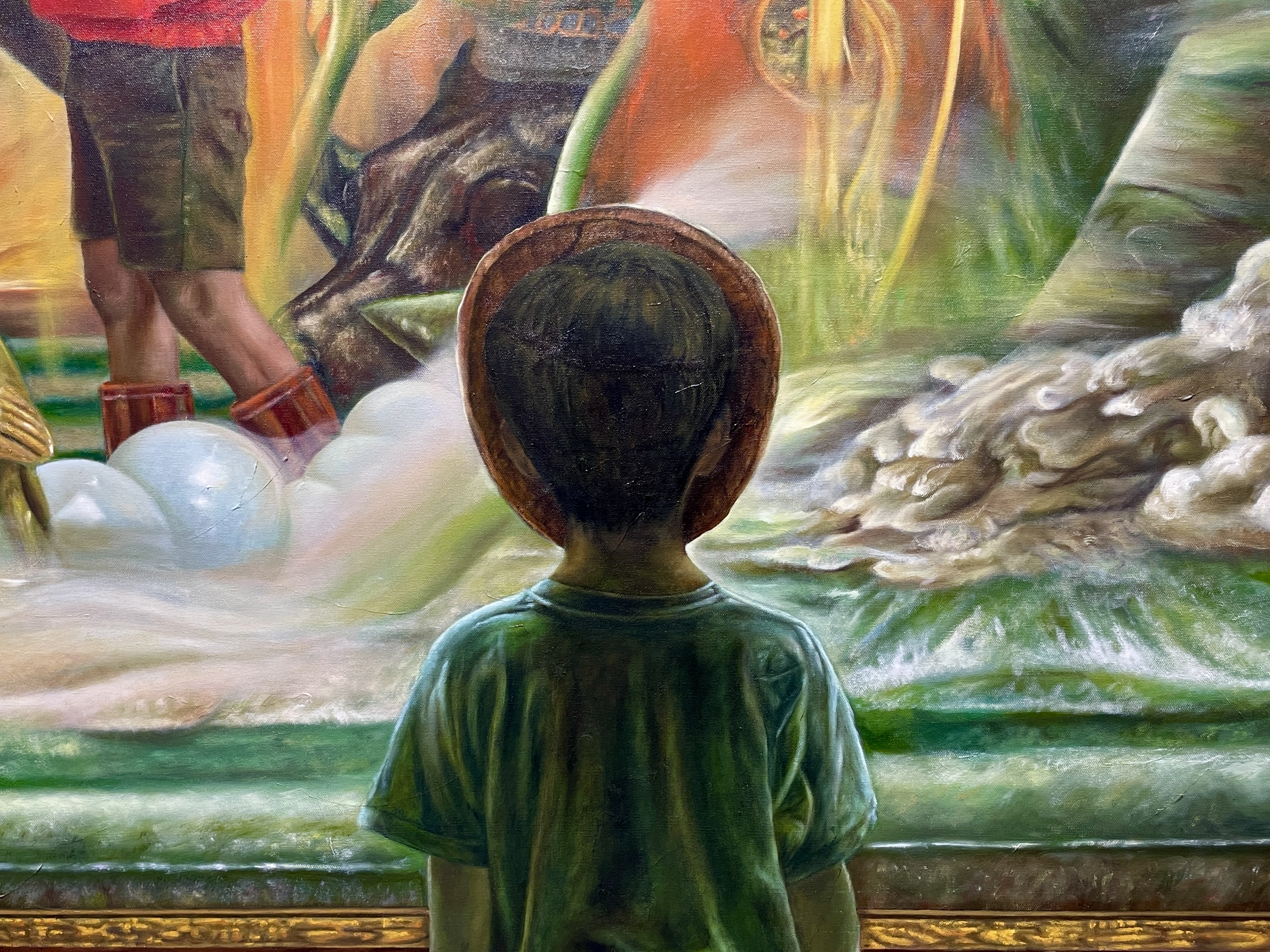
Not a journey toward something, but a journey within an attempt to revisit an inner space that is not constructed by grand narratives: a quiet space, unhurried, nearly nameless, and a time that loosens into reflection. It is not about nature as an object, but about slipping into a consciousness that grows alongside it slowly, wildly, and intuitively. With a fluid visual approach, there is no singular narrative structure. Instead, it works through layers, frictions, and pauses. Suluk is not representation; it is the trace of an inner journey that requires no map, only the sensitivity to be still within motion.
It presents a threshold moment between light and darkness, a fragile yet meaningful space-time. Within a visual landscape that appears unfinished, the figure of a child emerges not as a subject of nostalgia, but as a symbol of pure presence: a state of being untouched by social structures, language, or adult logic. In this context, the work does not “represent” childhood or spirituality, it challenges the ways we understand both. Through visual fragments that are nearly incomplete yet deeply resonant, it allows sensory and psychic experience to flow without a definitive endpoint. It arises from visual events—not depictions of nature, but an attempt to touch the essence of presence when the world has not yet imposed meaning.
This work invites viewers to remember that true harmony may not come from order, but from the courage to be fully present like a child who does not try to understand nature, but becomes one with it.
___________
In the Q&A below, artist Gilang Fradika reflects on the richly detailed world of his paintings, works that hover between memory and imagination, nature and fantasy. Here, he speaks about the emotional and sensory dimensions of his process, his attraction to natural forms like anatomy and plants, and the quiet tension between structure and intuition in his work.
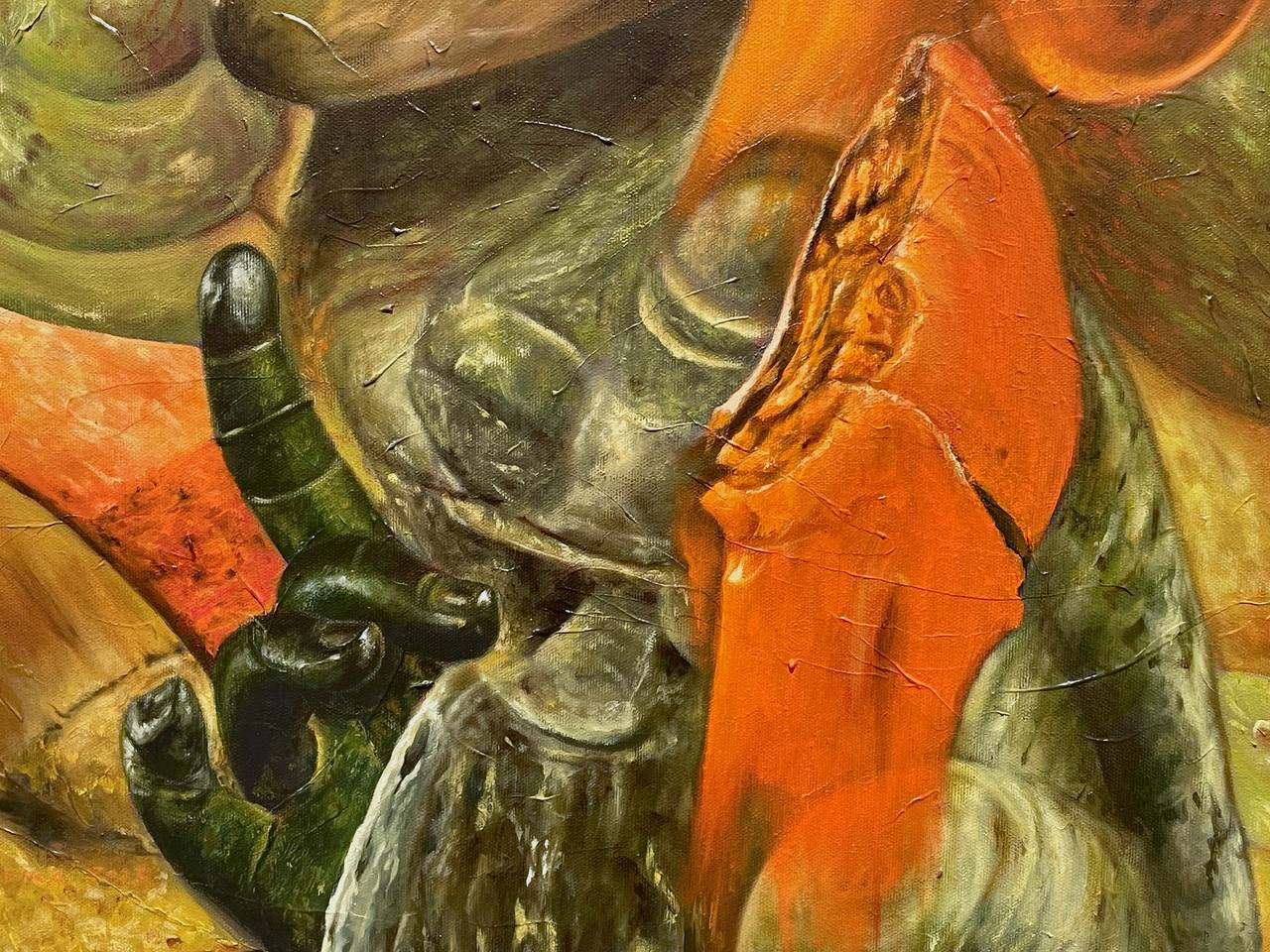
Detail image of “Luruh, 2025”
Mizuma Gallery: Can you describe your style of work?
Gilang Fradika: My style is more about attunement. I approach painting as a space of emergence, not control. I build works layer by layer; letting intuition, texture, and silence shape the surface. My style isn’t a statement, but a question I return to in each piece.
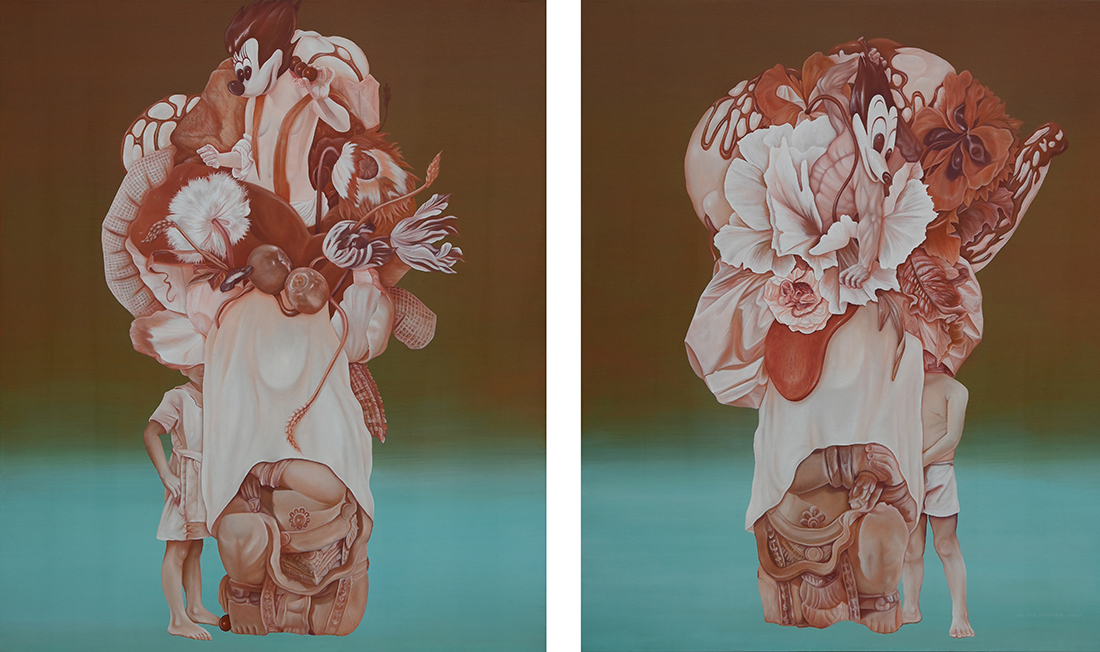
Gilang Fradika, Kindap, 2021, oil on canvas, 145 × 120 × 4.5 cm each (diptych). © Gilang Fradika, courtesy of the artist and Mizuma Gallery.
Mizuma Gallery: Your work often explores and offers an imaginative in-between (liminal) space blending time, space and realities that are open to interpretation. What excites you about the liberation of narratives, and what do you think people often misunderstand about it?
Gilang Fradika: Liminality excites me because it suspends certainty. Releasing narrative opens up the space for sensation, ambiguity, and multiplicity; elements I feel are essential to honest perception. The common misunderstanding is that without a fixed story, the work lacks depth or coherence. But I see narrative freedom as a gesture of trust: in the viewer’s body, in the image’s silence, in meaning that doesn’t need to arrive.
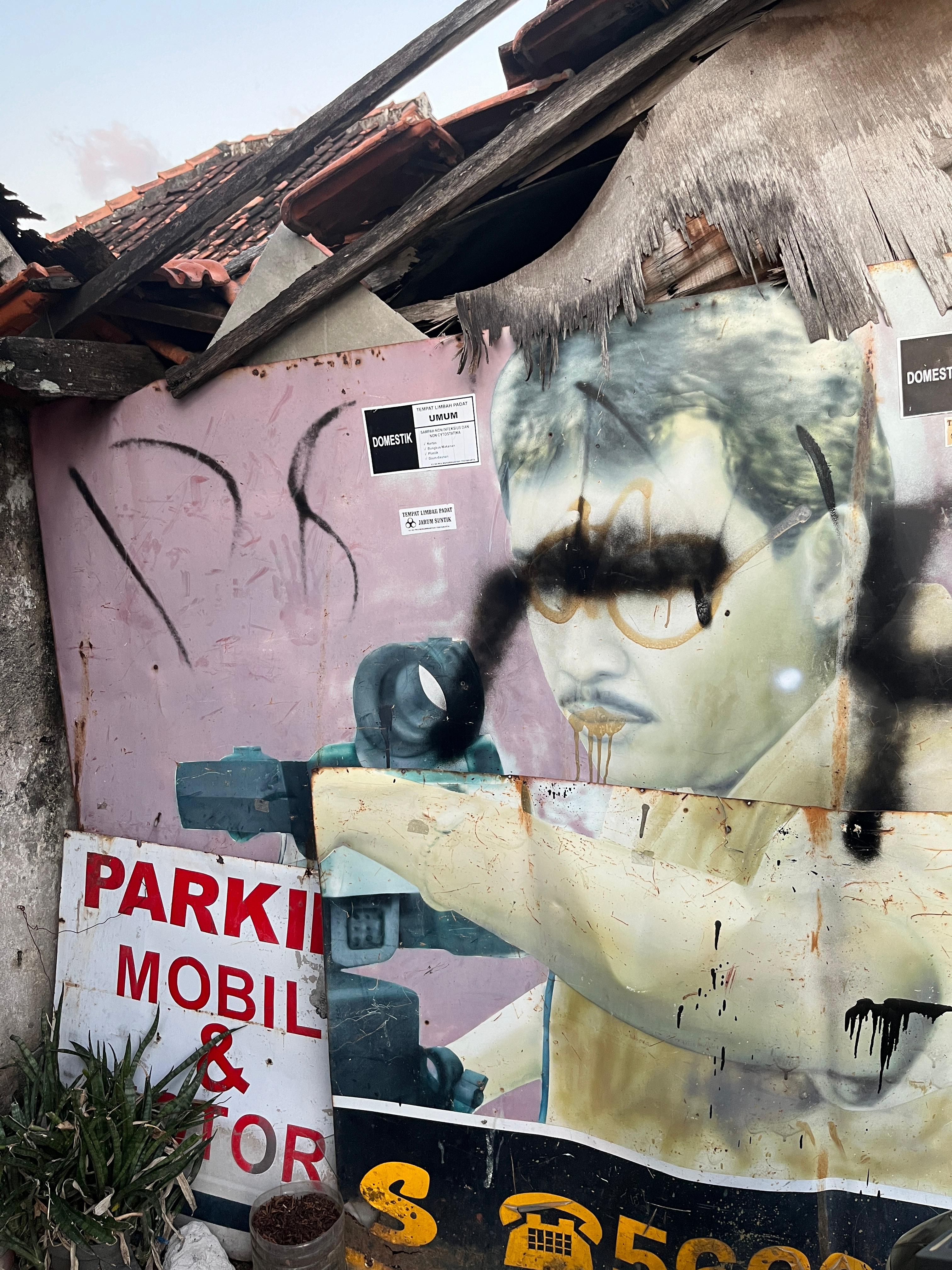
Reference photograph taken by the artist.
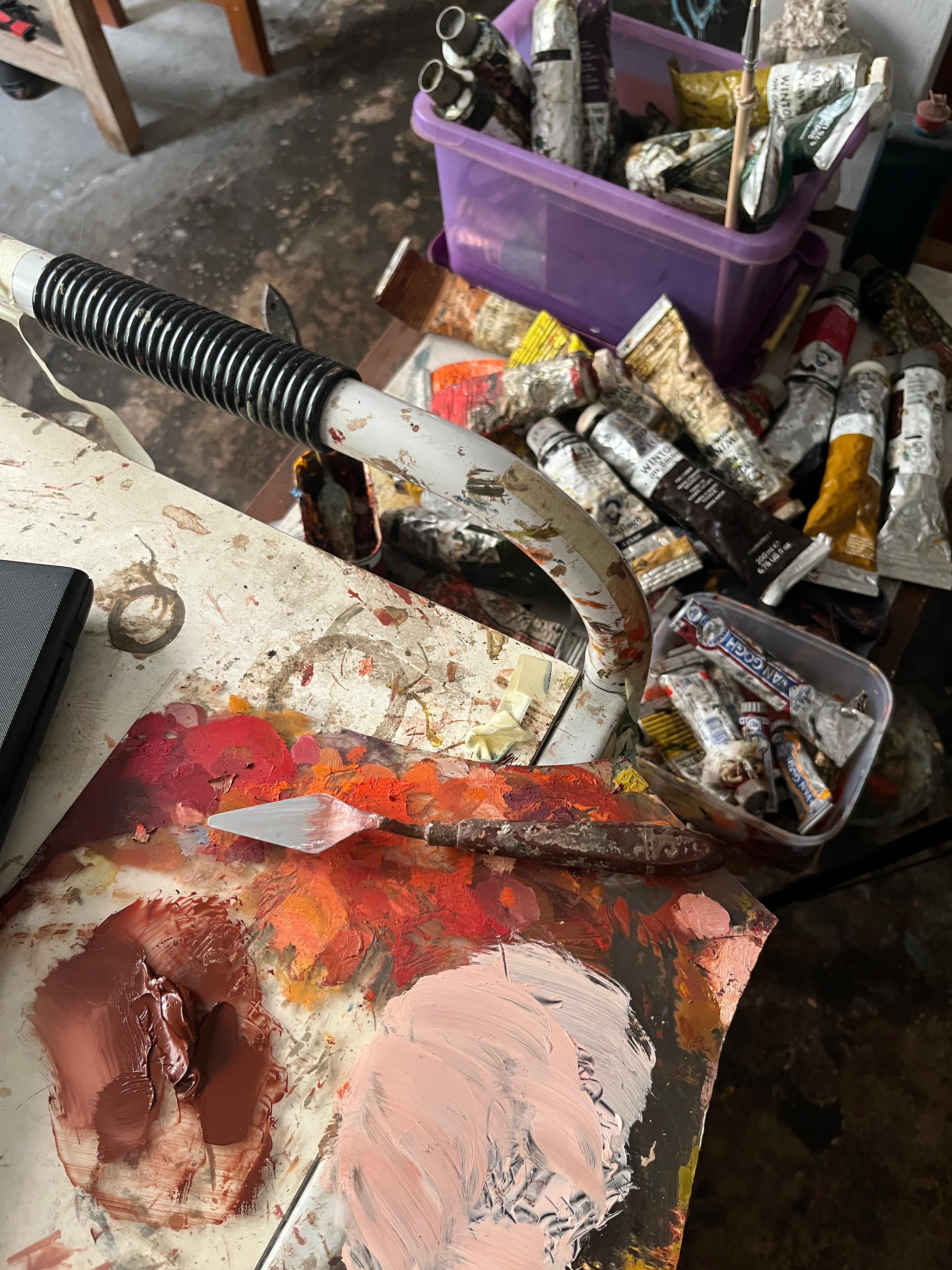
Gilang’s studio in Yogyakarta.
Mizuma Gallery: What do you think about structure and order?
Gilang Fradika: Structure, for me, is a hidden rhythm. Its something the body can feel even when the eye doesn’t name it. I value disorder, but only when it’s alive with purpose. My works are built like internal architectures: they shift and cohere from within.
Mizuma Gallery: The sharp colours, intense textures and complex layers on your paintings evokes a vivid sensory world beyond just the strong visuals. How would your other senses describe the works Suluk and Luruh?
Gilang Fradika: I think of Suluk and Luruh as spaces—spaces that touch the skin before reaching the eye.
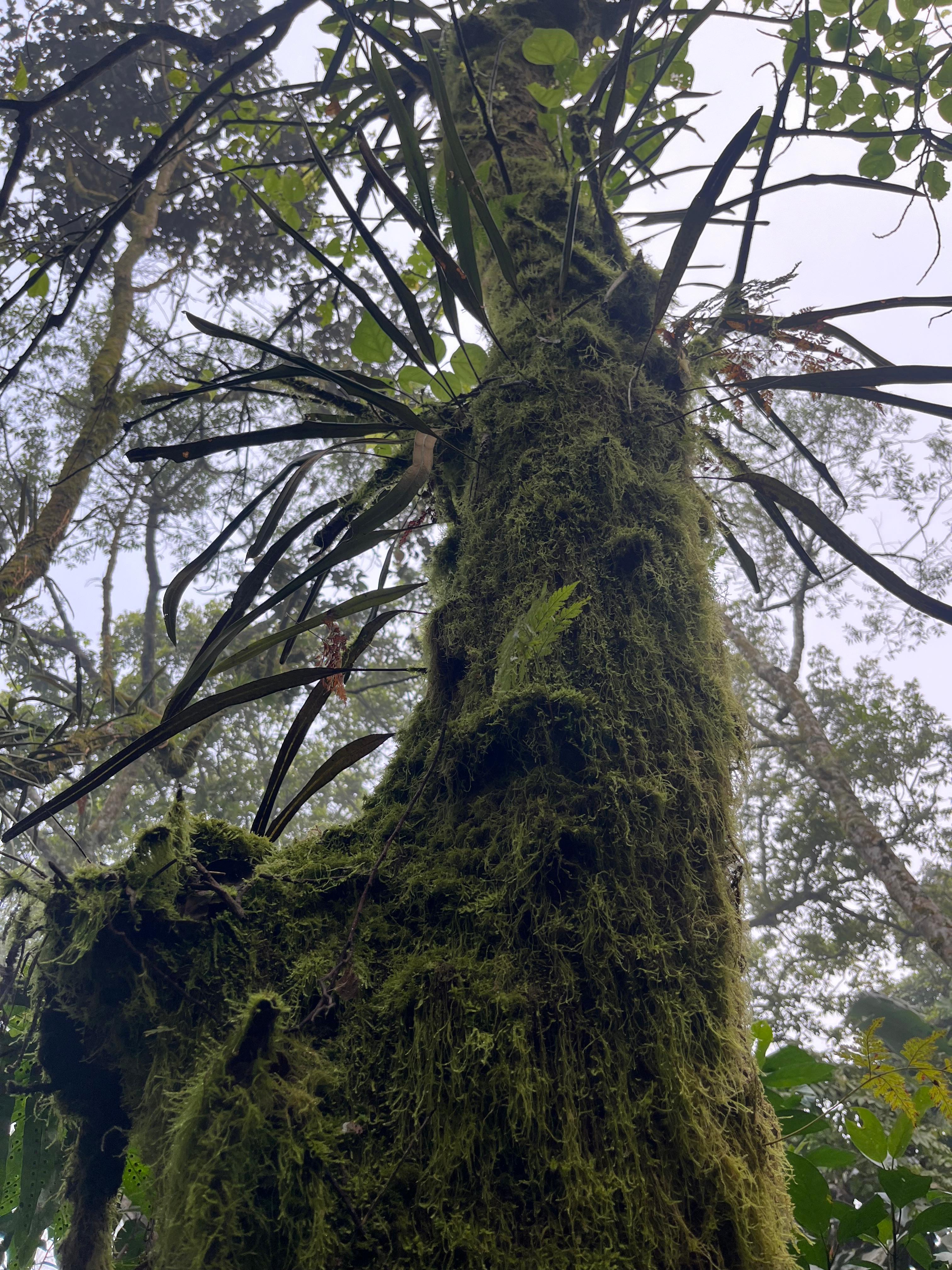
Reference image photographed by the artist.
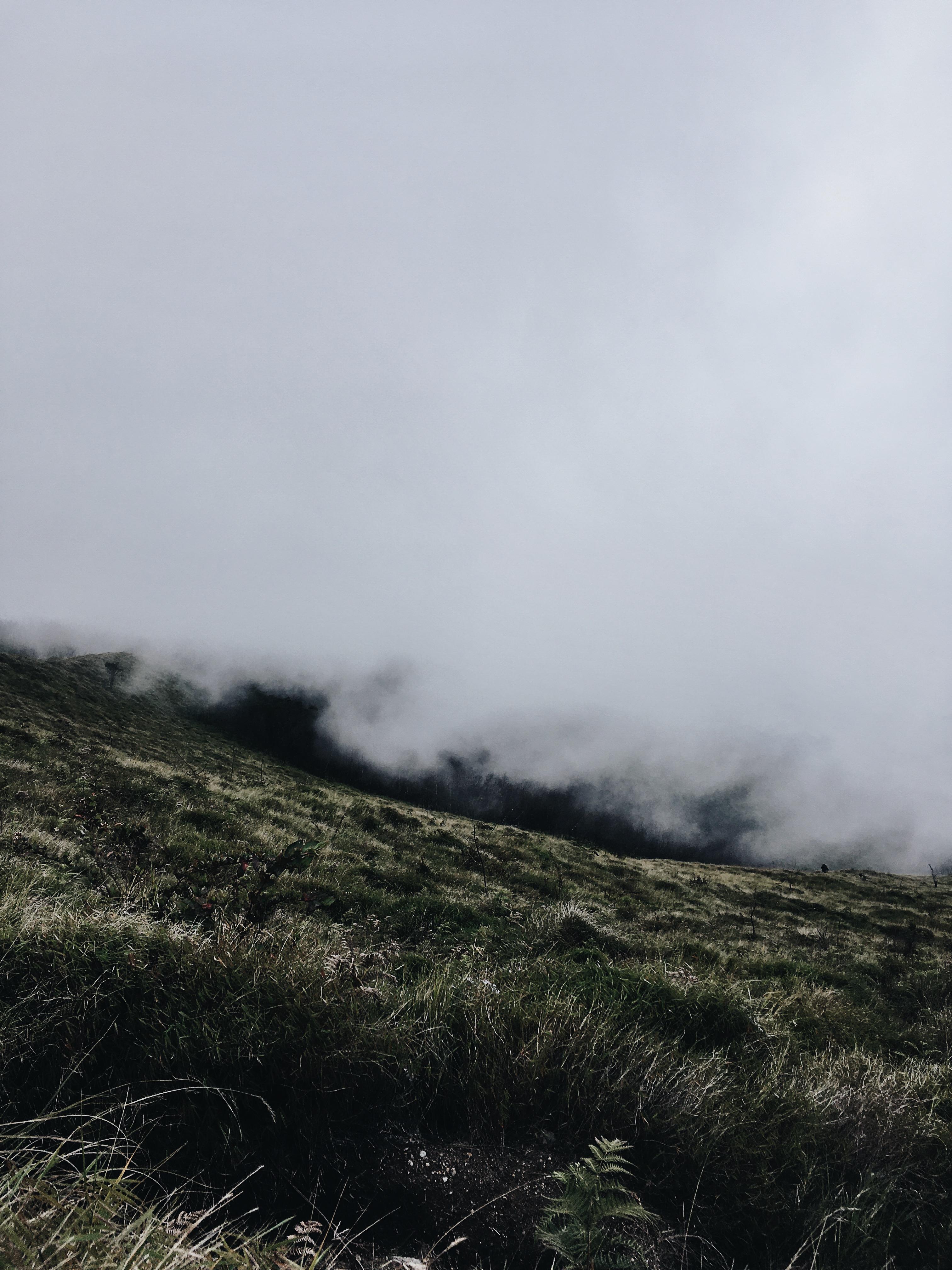
Reference image photographed by the artist.
Suluk sounds like a slow echo in a forest: damp, low, and reverent (a frequency). Feels like walking barefoot on damp ground, as if the air holds something sacred and unspoken. It smells like wet earth after rain.
Luruh, on the other hand, presents the sensation of a silent terminology. It feels like a memory nibbling on the tip of the tongue, as if something is collapsing into slow motion, in layers.
In both, the work unfolds through the body’s memories of touch, weather, and time.
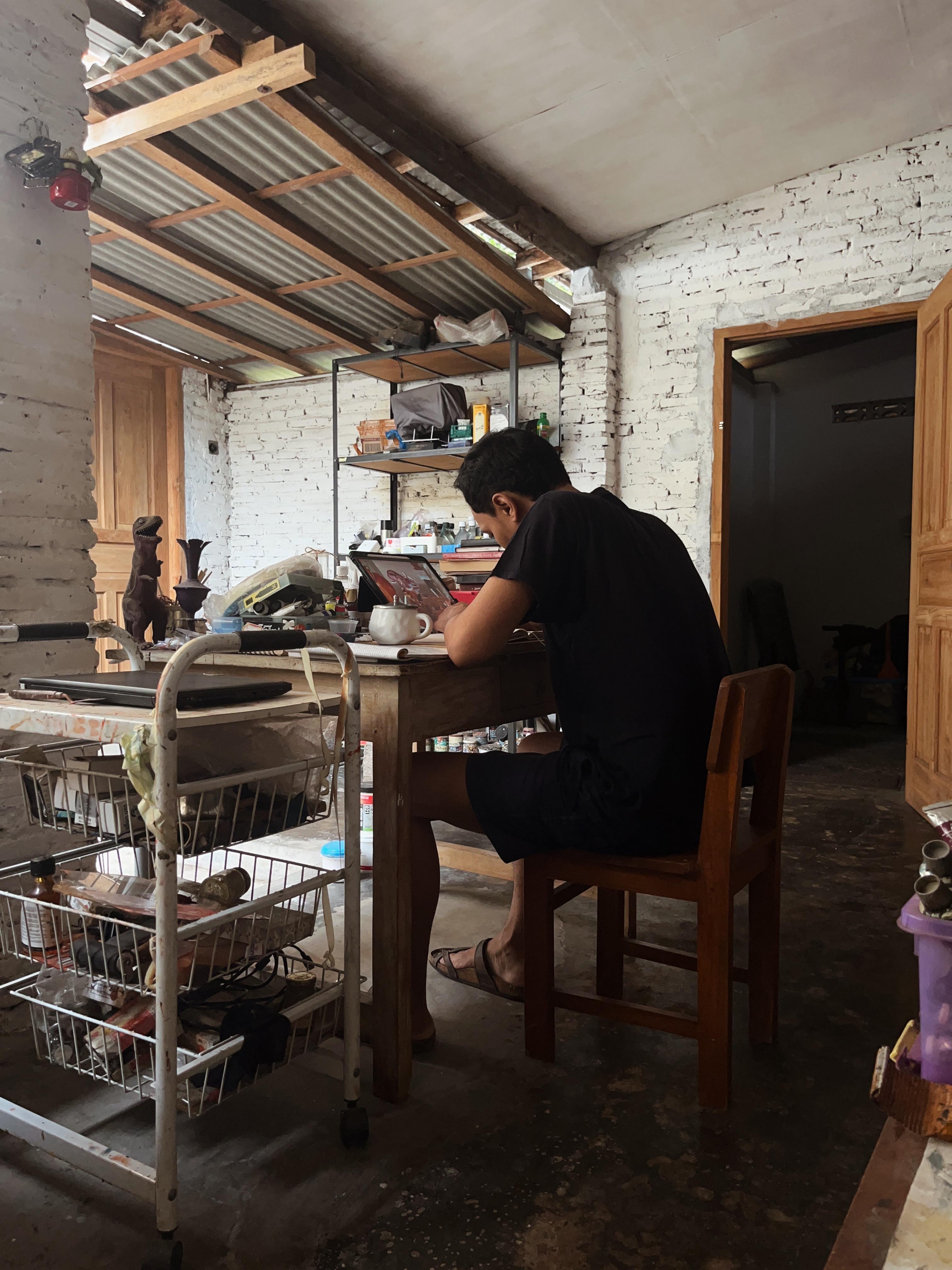
Gilang Fradika in his studio in Yogyakarta.
Mizuma Gallery: Is there a part of you, a feeling, memory, or belief, that you feel most vividly lives through your work?
Gilang Fradika: Perhaps it’s a part of me that hasn’t been taught how to speak. My works speak to a more primitive, sometimes childlike part of me. Ultimately, childhood, not as a visual memory, but as a way of being—that’s what comes alive in every creative process.
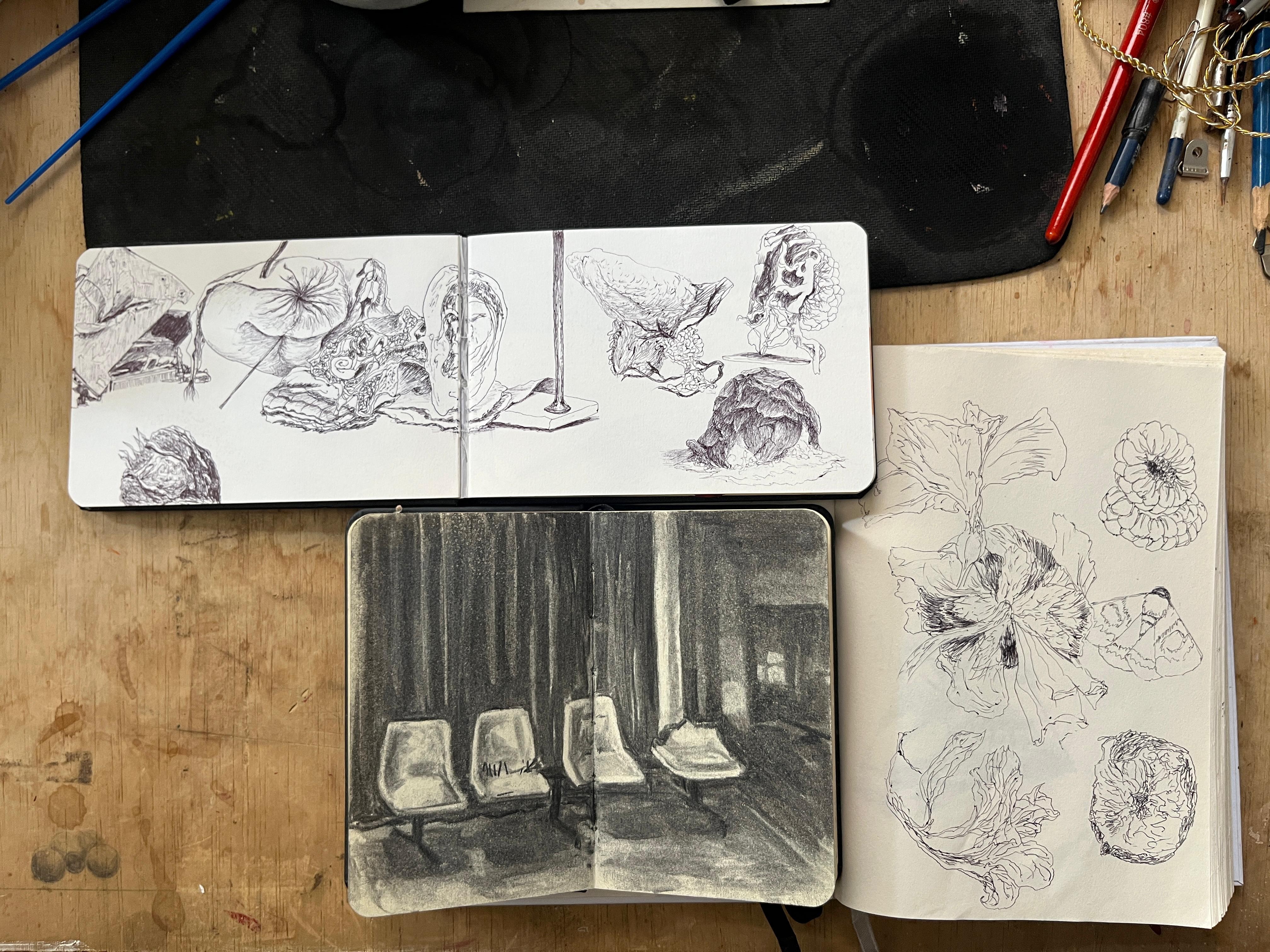
Artist sketchbook of collages and texture study for reference.
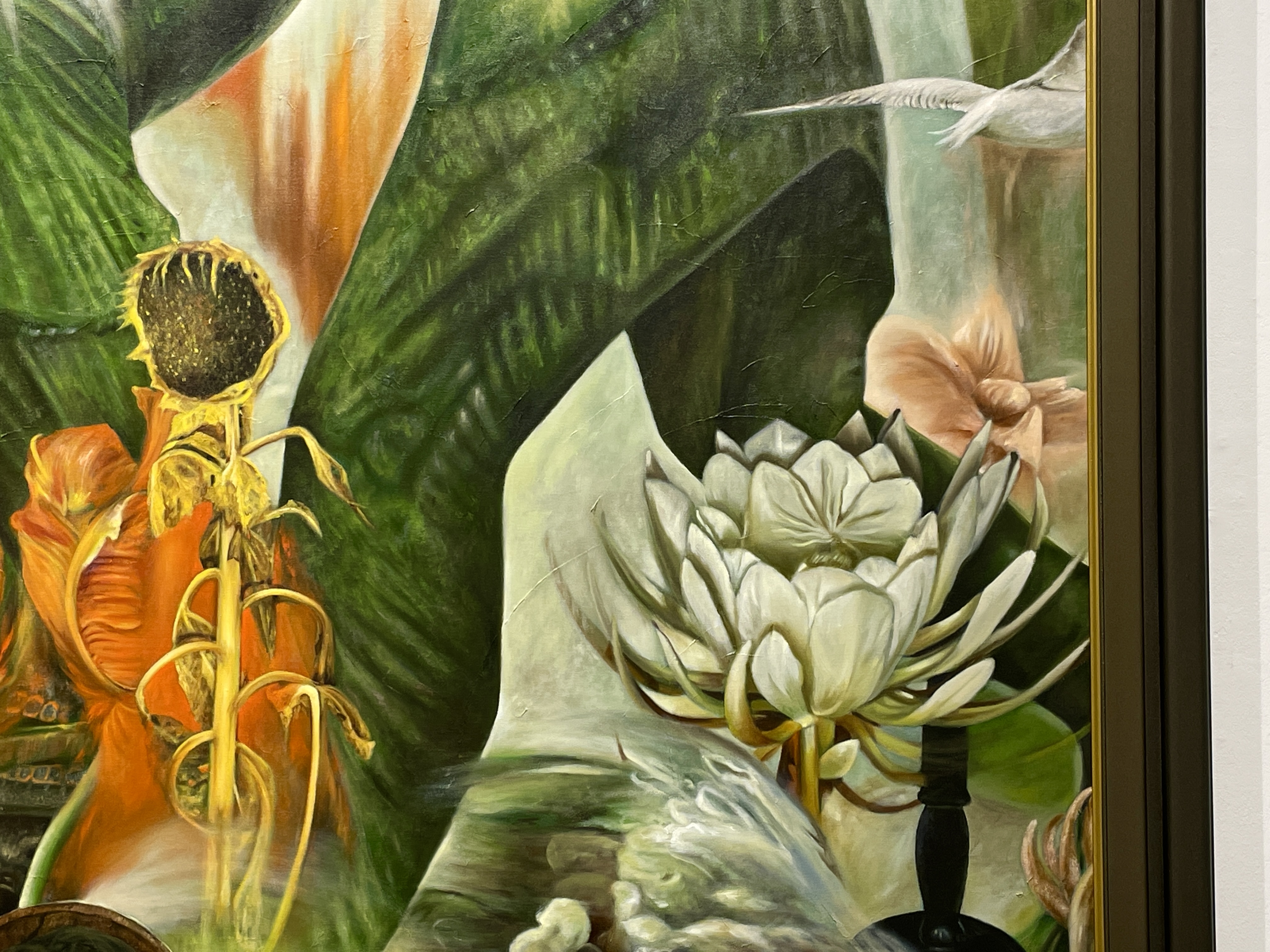
Detail image of “Suluk, 2025”
Mizuma Gallery: The textures and details in your paintings often seem rooted in natural forms, from human anatomy to plant structures and elemental patterns. What draws you to these organic sources, and how do they shape the way you build your compositions?
Gilang Fradika: I believe that the body and nature are never truly separate. Organic structures like leaf veins, blood vessels, or morning mists have their own logic, in the way they grow and move. I’m drawn to the eternal transience of these forms: they change, but they never disappear. My compositions are often built like networks—sometimes not starting from a centre, but from movements that respond to each other and build upon each other. I’m interested in how things grow, erode, entangle. The logic of nature—roots, skins, veins—is more honest to me than imposed symmetry. I often follow the rhythm of something unfolding rather than arranging.
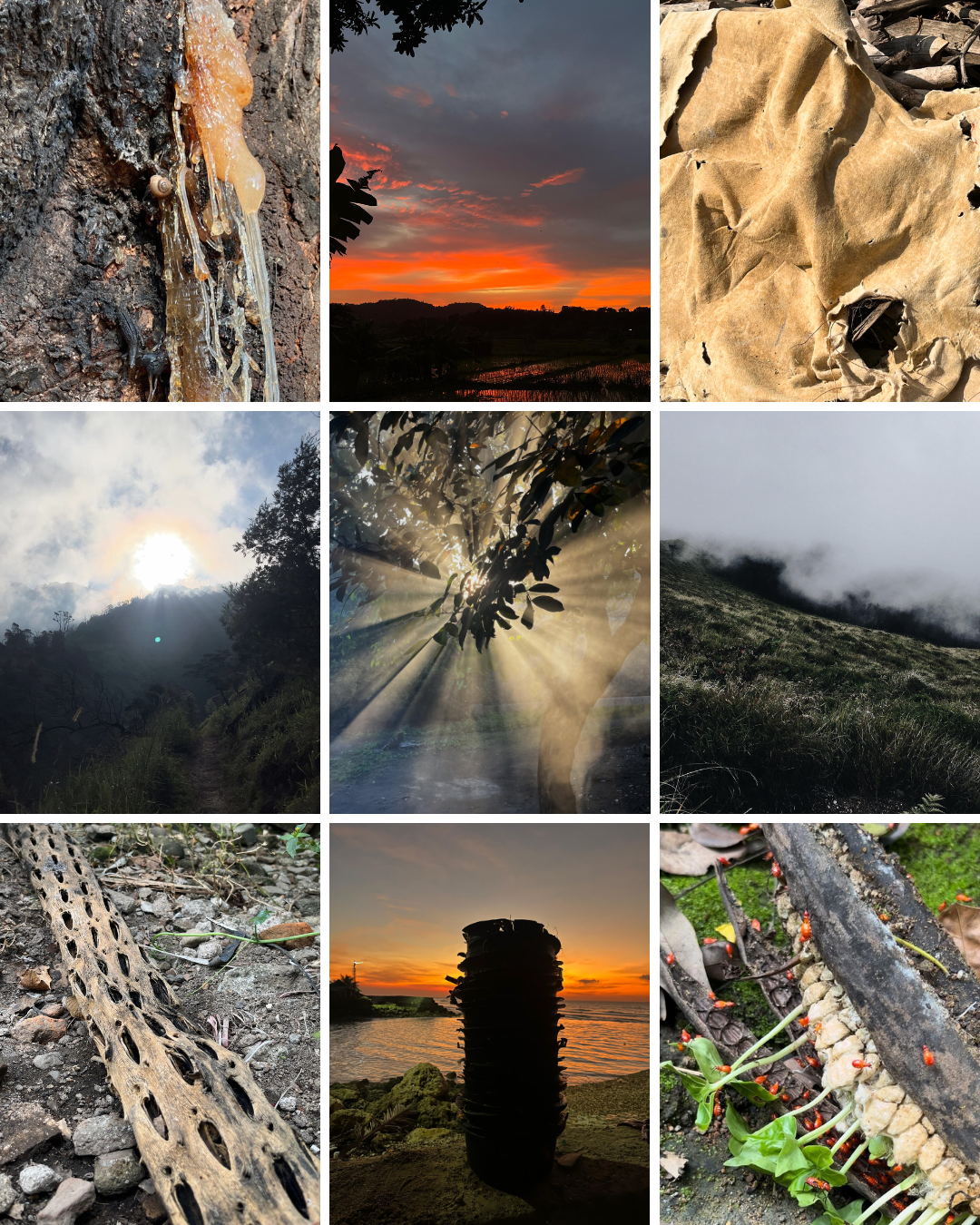
Reference images photographed by Gilang Fradika.
Mizuma Gallery: When you’re rendering textures of petals, veins, or fog, is it more about realism, metaphor, or mood?
Gilang Fradika: It’s all present at once. Sometimes texture is breath, sometimes a wound, sometimes simply a reminder that everything has a surface that can be touched. But what most often drives me is mood—not in the narrow emotional sense, but a psychic state that flows and changes like the mist itself. So realism and metaphor are not the goal, but traces of the intensity of feelings. These textures act like thresholds: they shift perception and let emotion move through the material.
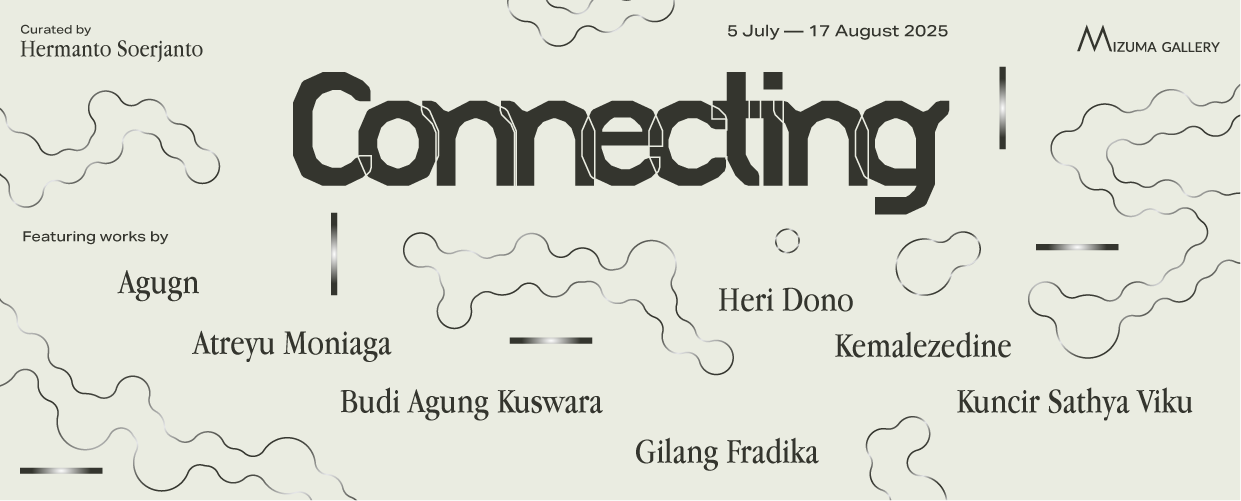
Connecting is a group exhibition that brings together seven contemporary Indonesian artists whose practices explore the many ways connection can emerge between people, ideas, materials, and environments. Curated by Hermanto Soerjanto, the exhibition reflects on the notion that connection is fundamental to all life, shaping our sense of purpose and grounding our presence in the world. The exhibition runs from 5 July to 17 August 2025 at Mizuma Gallery Singapore.
About the Artist
Gilang Fradika (b. 1988 in Majenang, Indonesia) graduated from UNY (Yogyakarta State University), Department of Fine Arts, with a major in Graphic Arts in 2012. Gilang works mostly with two-dimensional surfaces, particularly in painting and etching. His solo exhibitions include A long way and secret garden at DGTMB versus in Yogyakarta (2015), and (UN)COVER at RUCI Art Space, Jakarta (2021). Gilang took part in projects such as Pameran POSKAD SG50 in Gillman Barracks, Singapore (2015); Folkloristics (2018) and Hopes & Dialogues in Rumah Kijang Mizuma (2019) at Mizuma Gallery, Singapore; and ARTJOG: RESILIENCE in Yogyakarta (2020). Gilang Fradika lives and works in Yogyakarta, Indonesia.
—
This interview took place through email exchanges between Mizuma Gallery and Gilang Fradika in July 2025.
Copyright and Image Credits:
© Gilang Fradika, image courtesy of the artist and Mizuma Gallery



