
Also, being an outsider to Balinese culture gives me a certain distance, which naturally shapes a different perspective. That blend of insider knowledge and outsider interpretation is something you can clearly see in the visual language of my work.
– Kemalezedine
This is the third edition of Artist Insights for Connecting, an exhibition exploring the many ways connection can emerge between people, ideas, materials, and environments. In this interview, Kemalezedine discusses transforming Balinese rituals into contemporary works—folding sacred traditions into modern forms. His approach offers fresh ways to see Balinese heritage, inviting everyone to join the conversation between past and present.
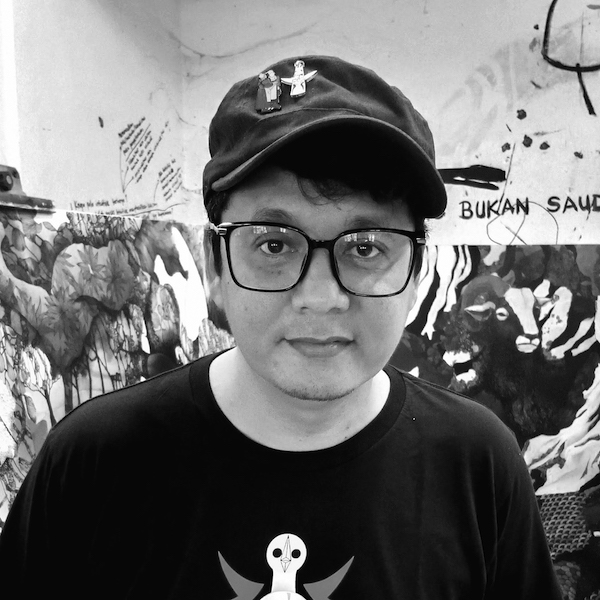 Kemalezedine (b. 1978, Yogyakarta, Indonesia) studied at the Faculty of Fine Arts and Design at Bandung Institute of Technology (ITB), Bandung, Indonesia from 1997 to 2004. He is part of the Nu-Abstract and Neo-Pitamaha groups in Bali, who study traditional Balinese art, while incorporating new experimentations and ideas. Kemalezedine’s focus is to create and explore the world of painting-drawing. His paintings intertwine the genealogies of both traditional art lines and modern painting through colour planes, composition, and balance. Existing between different painting styles, his paintings explore the tension between the traditional and the modern, natural and unnatural, macrocosm and microcosm, emptiness and fullness. Kemalezedine lives and works in Bali, Indonesia.
Artist Statement
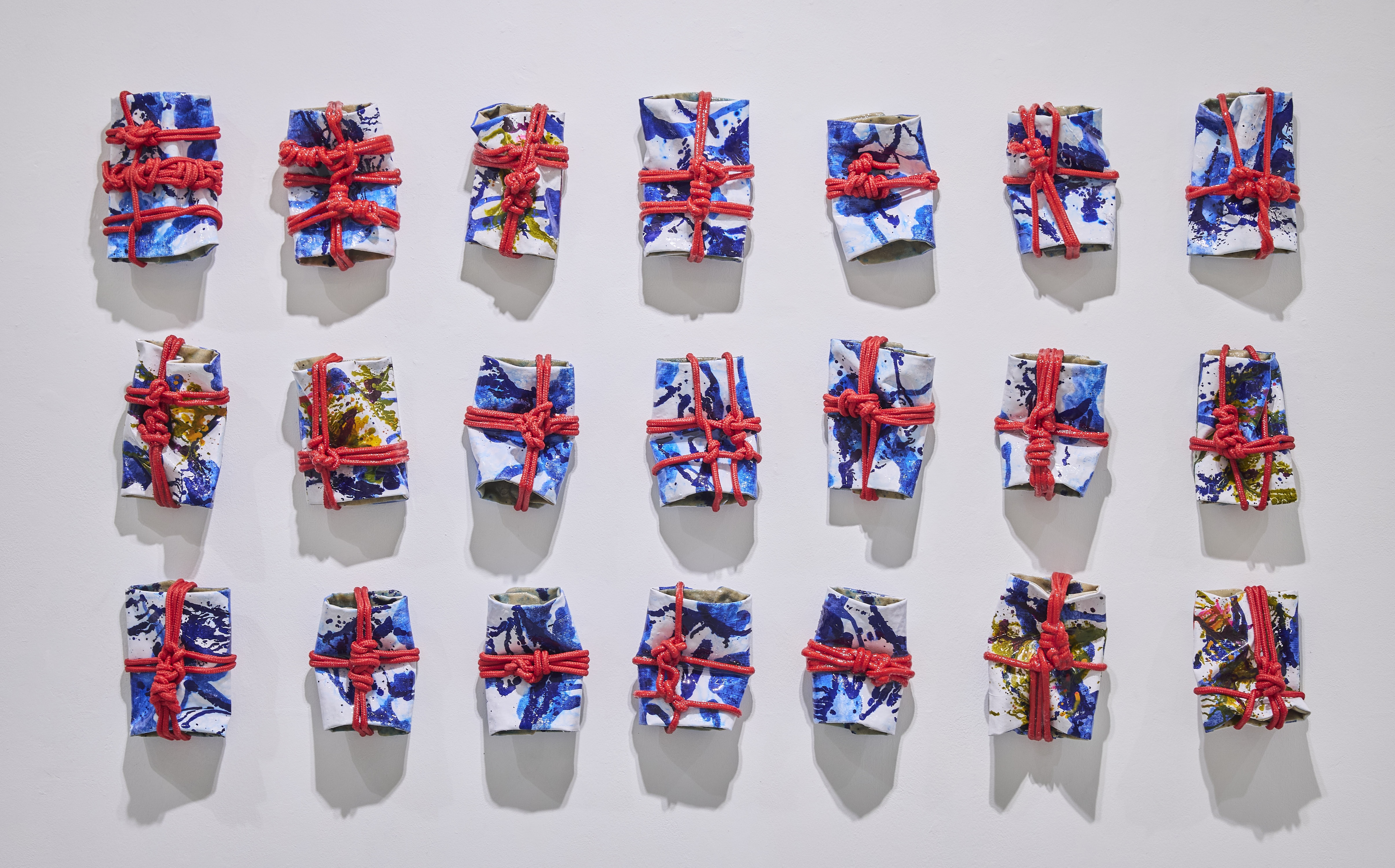
Kemalezedine, Seseletan #4, 2025, mixed media, set of 21, 23 × 15 × 8 cm each © Kemalezedine, image courtesy of the artist and Mizuma Gallery
In this work, I explore the concept of seseletan as both a visual language and an artistic strategy. In Balinese, seseletan refers to something that is quietly tucked away—a small object, a hidden message, or a trace placed within the folds of cloth, the body, or a space—not meant to be revealed, but to be cared for, protected, and silently remembered.
I understand this concept as a way of presenting memory and trauma not in a direct or confrontational manner, but in a way that is still deeply felt. It does not appear through overt representation, but through gaps, accumulations, or layers of material. In this work, I draw on the simplest gestures of folding and binding as visual methods across collage, relief, and installation.
To place a seseletan in the context of art-making is not about hiding something so it can’t be found. Rather, it is about creating a tension between the visible and the invisible, between presence and absence. It reflects how Balinese culture, and many others, value things that are cared for in silence. What is tucked away is never truly lost; in fact, it becomes the most powerful part of meaning and value.
In the Balinese spiritual world, what is hidden often becomes the source of power: a keris (sacred dagger) has no life without its pamor (inner essence), and ceremonies are incomplete without banten (offerings) that contain symbolic miniatures. In the body, we believe the most sacred things reside in the deepest, unseen spaces, whether in the navel, chest cavity, or the back of the head. In art, I try to absorb this value: how something small and hidden can carry immense energy.
This work also repositions the viewer. Rather than merely observing, the viewer is invited to search, to guess, to feel. There are small objects not listed on the label, forms that only appear from certain angles. None of it is fully explained, because seseletan is about maintaining an intimate connection between the creator, the experience, and the one who bears witness.
I believe that in a world that is so loud and overly exposed, we need spaces to keep things. Spaces where not everything is said. Within seseletan, I have found a quiet language that feels most honest: that parts of us, parts of our history, and parts of our wounds are meant to stay within the folds—not to be forgotten, but to be quietly cared for.
___________
In the Q&A below, artist Kemalezedine discusses his artistic evolution since moving to Bali in 2011. Initially detached from local traditions, he now reinterprets them through a contemporary lens, blending painting with sculptural elements inspired by rituals like rerajahan (folded sacred drawings). His work invites viewers, whether familiar with Balinese culture or not, to engage with tradition’s ongoing transformation.
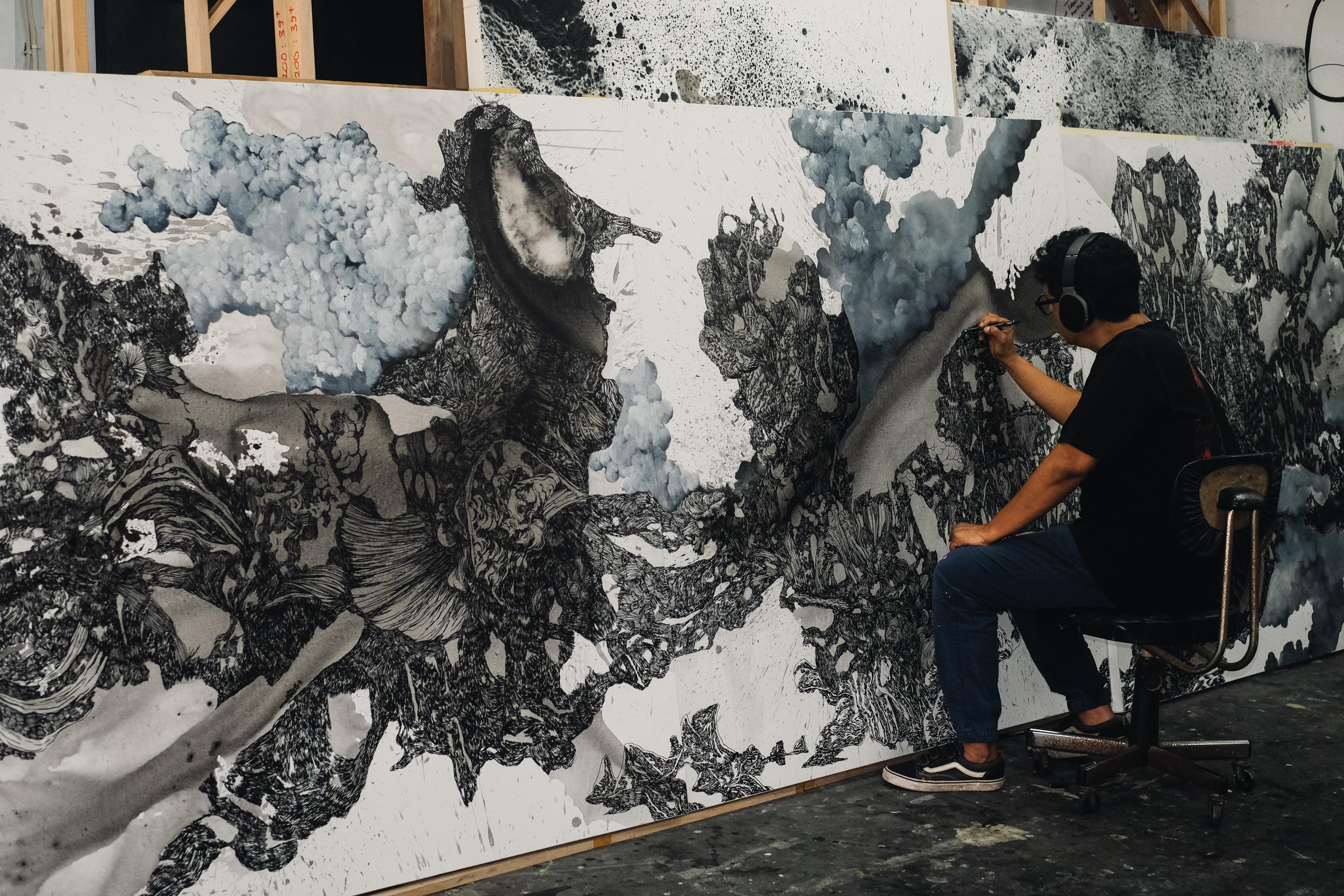
Kemalezedine in his studio in Bali. Image courtesy of the artist.
Mizuma Gallery: In 2011, you moved from Jakarta to Bali and started focusing on your artistic career. Coming from outside the island’s traditions, do you feel that gives you a unique kind of perspective or even freedom in how you approach its visual language?
Kemalezedine: When I first moved to Bali, I had zero interest in traditional Balinese art. I saw Bali simply as a peaceful place to live and set up a studio. But over time, I became intrigued and started exploring its traditional art more deeply. In doing so, I felt a sense of freedom in how I approached its visual language, probably because I didn’t yet understand the formal rules and conventions of Balinese art. My perspective back then was rooted more in fine art than in religious or cultural rituals, which also influenced the way I engaged with it.
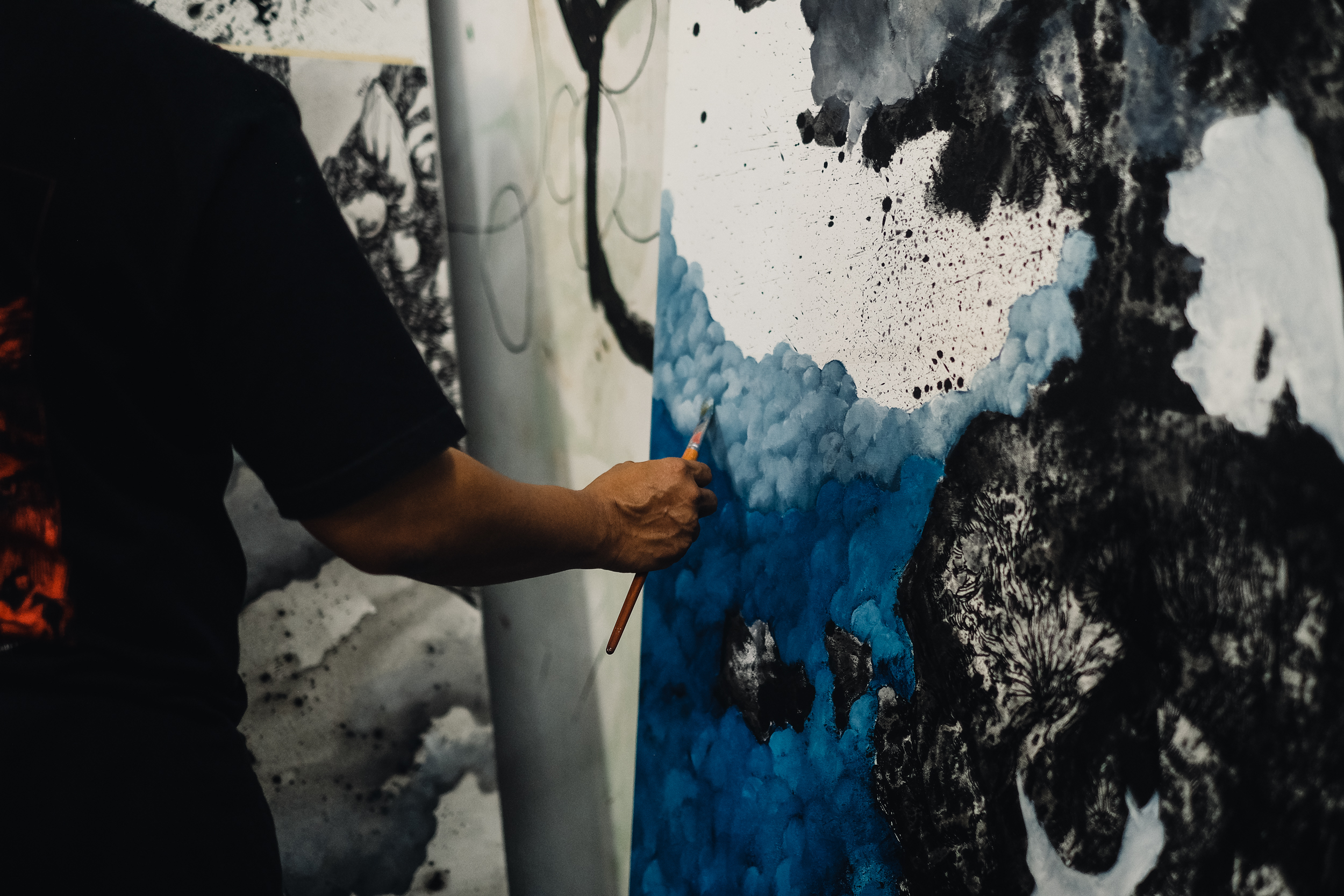
Kemalezedine in his studio in Bali. Image courtesy of the artist.
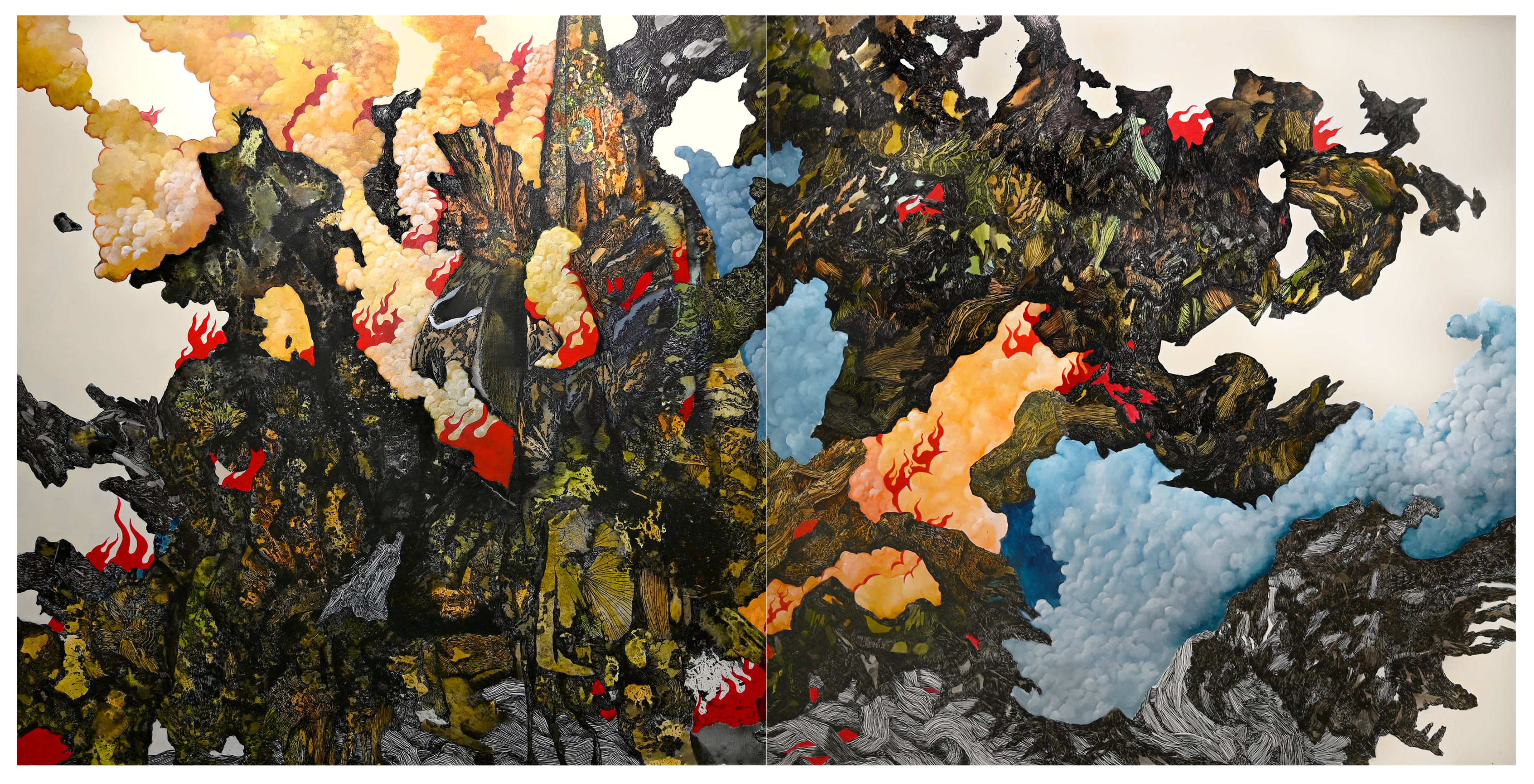
Kemalezedine, R.O.F (Ring of Fire), 2022, acrylic and ink on canvas, 200 × 400 × 5 cm (diptych) © Kemalezedine, image courtesy of the artist and Mizuma Gallery
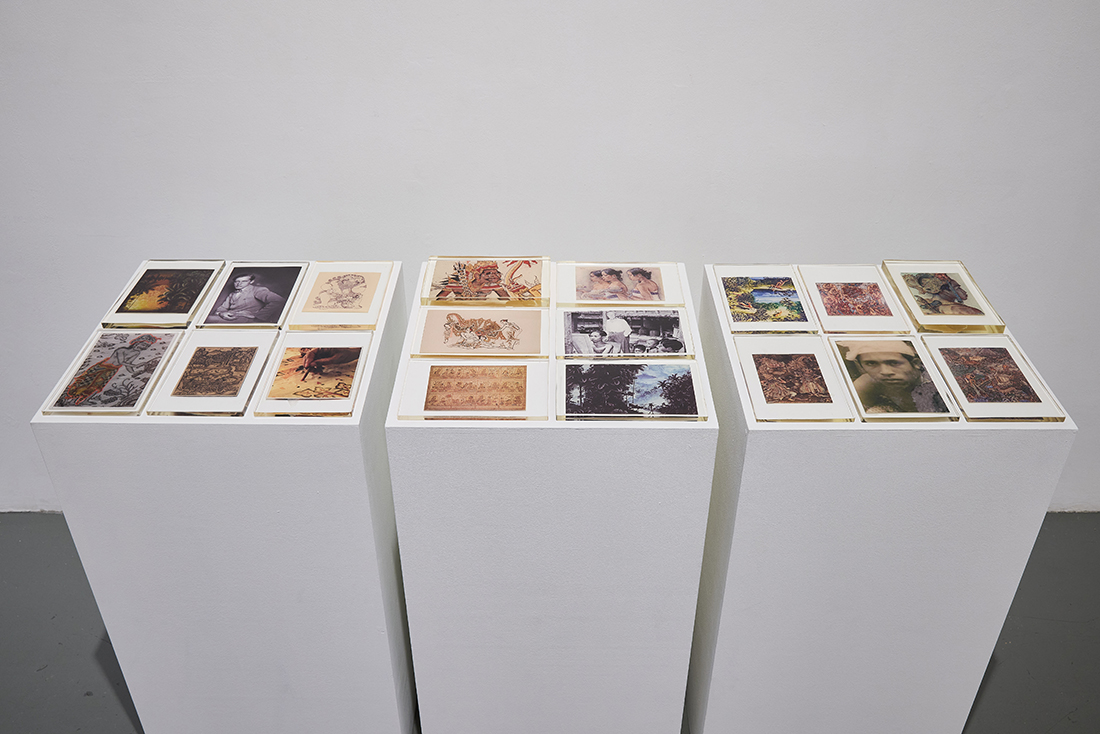
Exhibition view of ‘Kemalezedine; Epigraphic Landscape of Balinese Painting’ at Mizuma Gallery Singapore, 2024. Photography by Wong Jing Wei, courtesy of Mizuma Gallery.
Mizuma Gallery: You’ve been part of Neo-Pitamaha, which focuses on rethinking Balinese painting in contemporary terms, and Post Tradition which represents the broader evolution of traditional values in modern life. For someone new to these ideas, how would you explain their distinct but complementary roles? And what future do you imagine when these approaches intersect in art practice?
Kemalezedine: Neo-Pitamaha and Post Tradition are actually two different ideas. Neo-Pitamaha focuses specifically on exploring Balinese painting within a contemporary context, so its concerns are centered around painting as a medium. Post Tradition, on the other hand, refers to a broader cultural condition in which modern life continues to carry traditional values in everyday experience. It’s not just about art, but about how tradition lives on and evolves within today’s world.
In the context of fine art, I see Post Tradition as offering a space for artists to critically reflect on these evolving realities and express them through their work. I hope that in the future, this leads to more thoughtful, reflective artworks that engage deeply with both tradition and contemporary life.
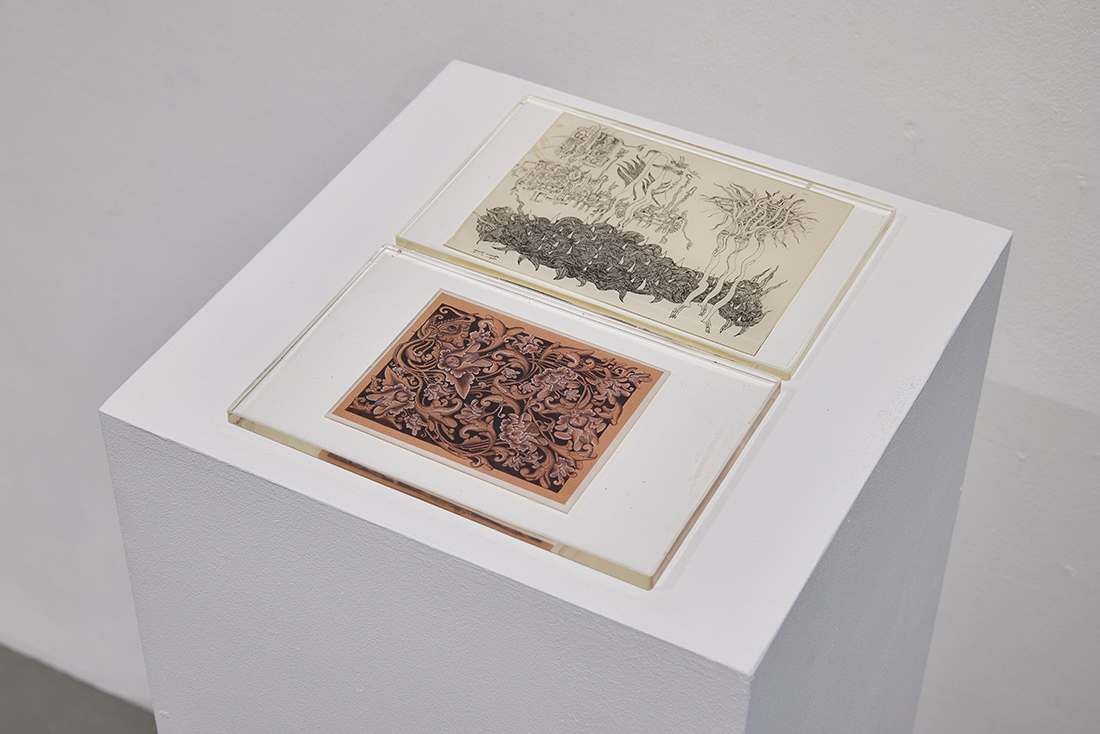
Reference images on view at ‘Kemalezedine; Epigraphic Landscape of Balinese Painting’ at Mizuma Gallery Singapore, 2024. Photography by Wong Jing Wei, courtesy of Mizuma Gallery.
Mizuma Gallery: Traditional Balinese painting is incredibly rich, but not always visible in global art spaces. How do you see your work opening new ways for people to experience or talk about it today?
Kemalezedine: There are many layers to what we call the global art space, but I’d like to start with my perspective on contemporary art. I believe contemporary art creates space for local practices to establish their own centers, rather than always referring to a dominant hub, like the West, in order to be recognized globally. Gaining visibility on a global level requires effort, especially in terms of how the work connects to relevant discourses and resonates with its audience. If global art visibility is often driven by popularity, then strategic publicity and relationships play a crucial role in that process.
As for introducing new ways of engaging with traditional Balinese painting, it starts with understanding the tradition itself. My approach through technique, medium, iconography, symbolism, visual deconstruction, and engagement with environmental, social, and political issues differs significantly from classical Balinese methods. Also, being an outsider to Balinese culture gives me a certain distance, which naturally shapes a different perspective. That blend of insider knowledge and outsider interpretation is something evident in the visual language of my work.
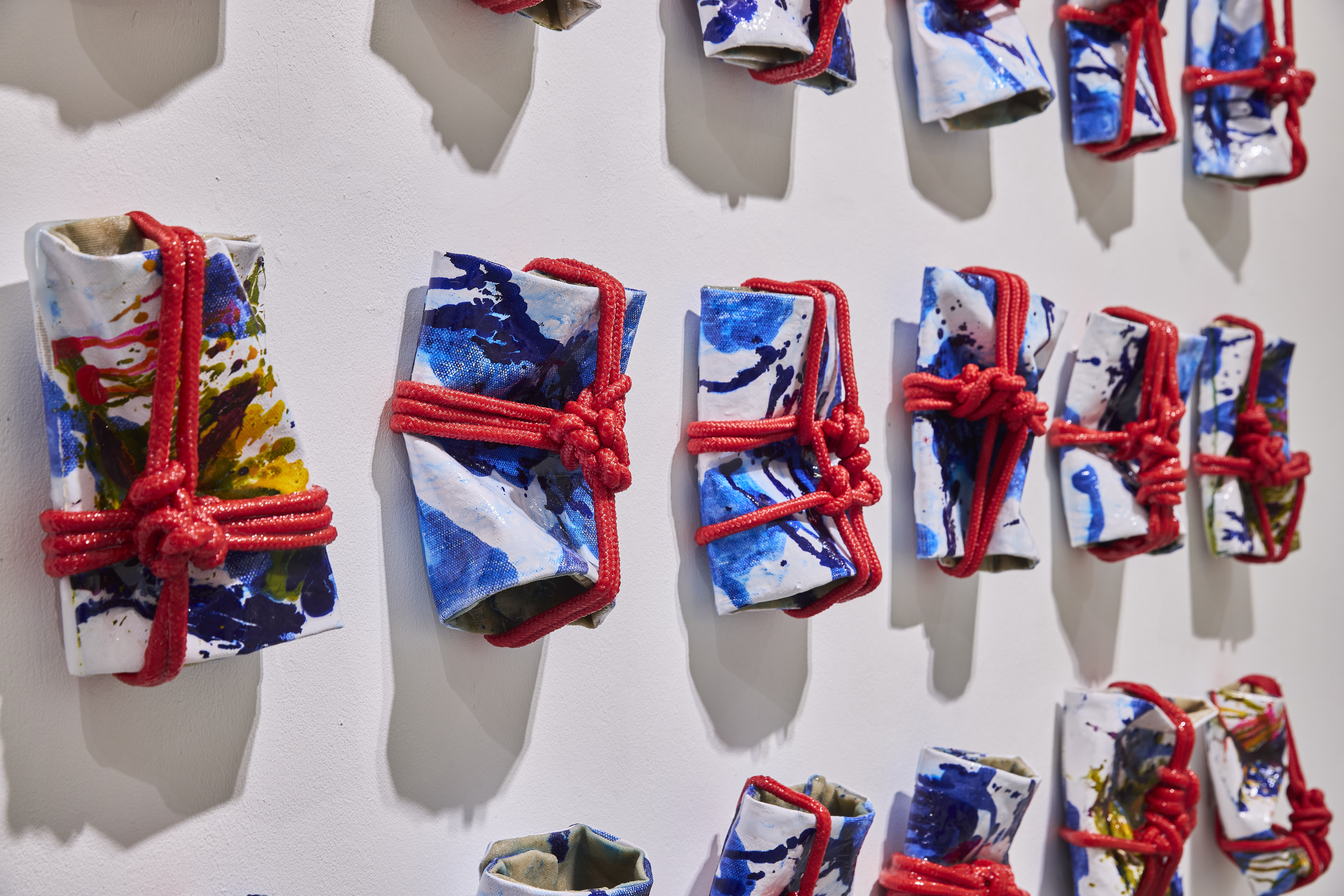
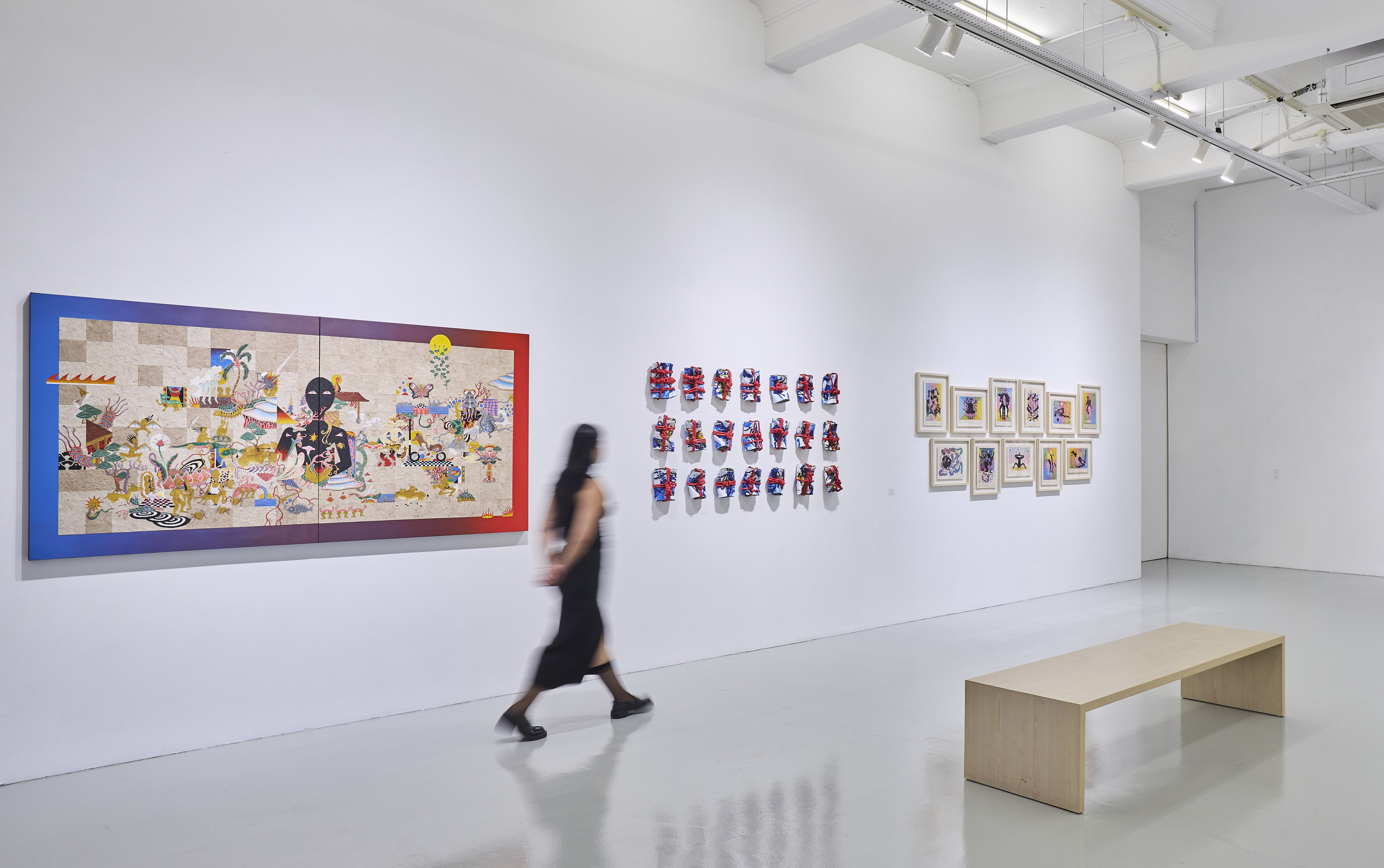
Exhibition view of Kemalezedine, Seseletan #4, 2025, mixed media, set of 21, 23 × 15 × 8 cm each © Kemalezedine, image courtesy of the artist and Mizuma Gallery
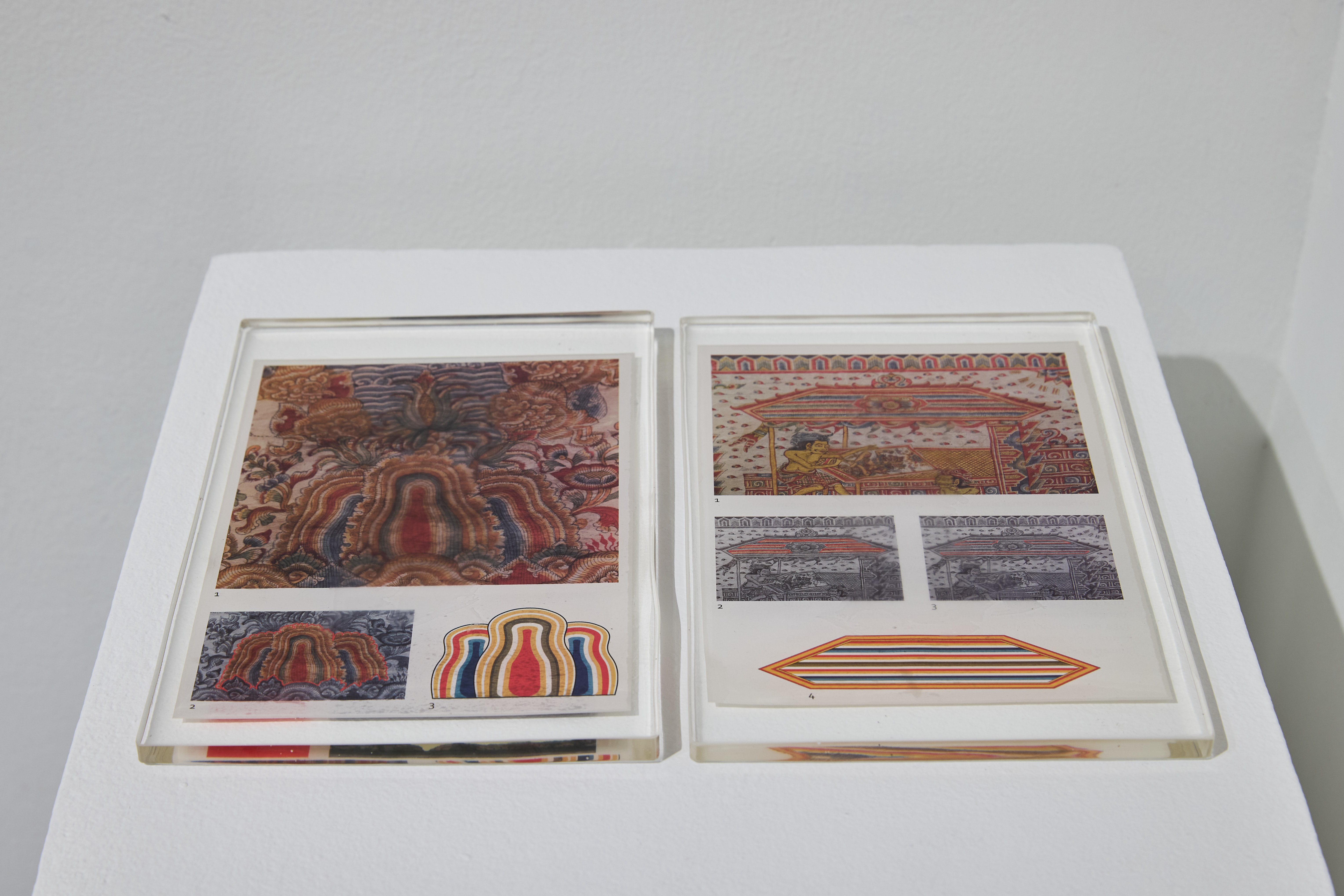
Reference images on view at ‘Kemalezedine; Epigraphic Landscape of Balinese Painting’ at Mizuma Gallery Singapore, 2024. Photography by Wong Jing Wei, courtesy of Mizuma Gallery.
Mizuma Gallery: When people see your work, what do you hope they notice or feel, especially those unfamiliar with Balinese visual traditions?
Kemalezedine: I think that becoming familiar with Balinese visual traditions starts with recognition and understanding, although that ultimately depends on the viewer’s interest. As an artist working between autonomy and external cultural references, I naturally reflect on the content and context behind each piece. I can’t control how people respond to my work, especially those unfamiliar with Balinese traditions. But at the very least, I hope it sparks enough curiosity to invite questions and open dialogues that lead to deeper engagement and reflection.
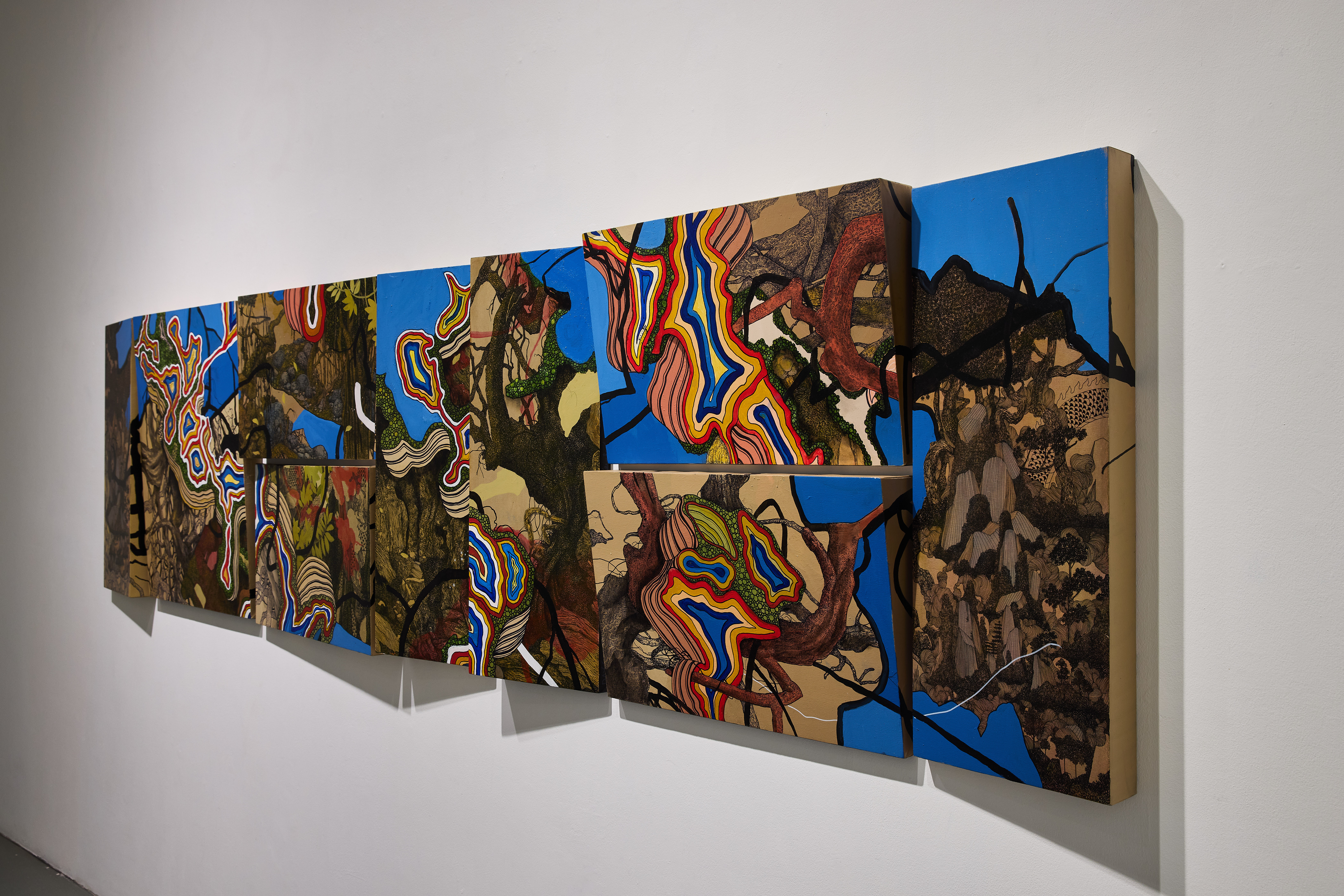
Exhibition view of ‘Kemalezedine; Epigraphic Landscape of Balinese Painting’ at Mizuma Gallery Singapore, 2024. Photography by Wong Jing Wei, courtesy of Mizuma Gallery.
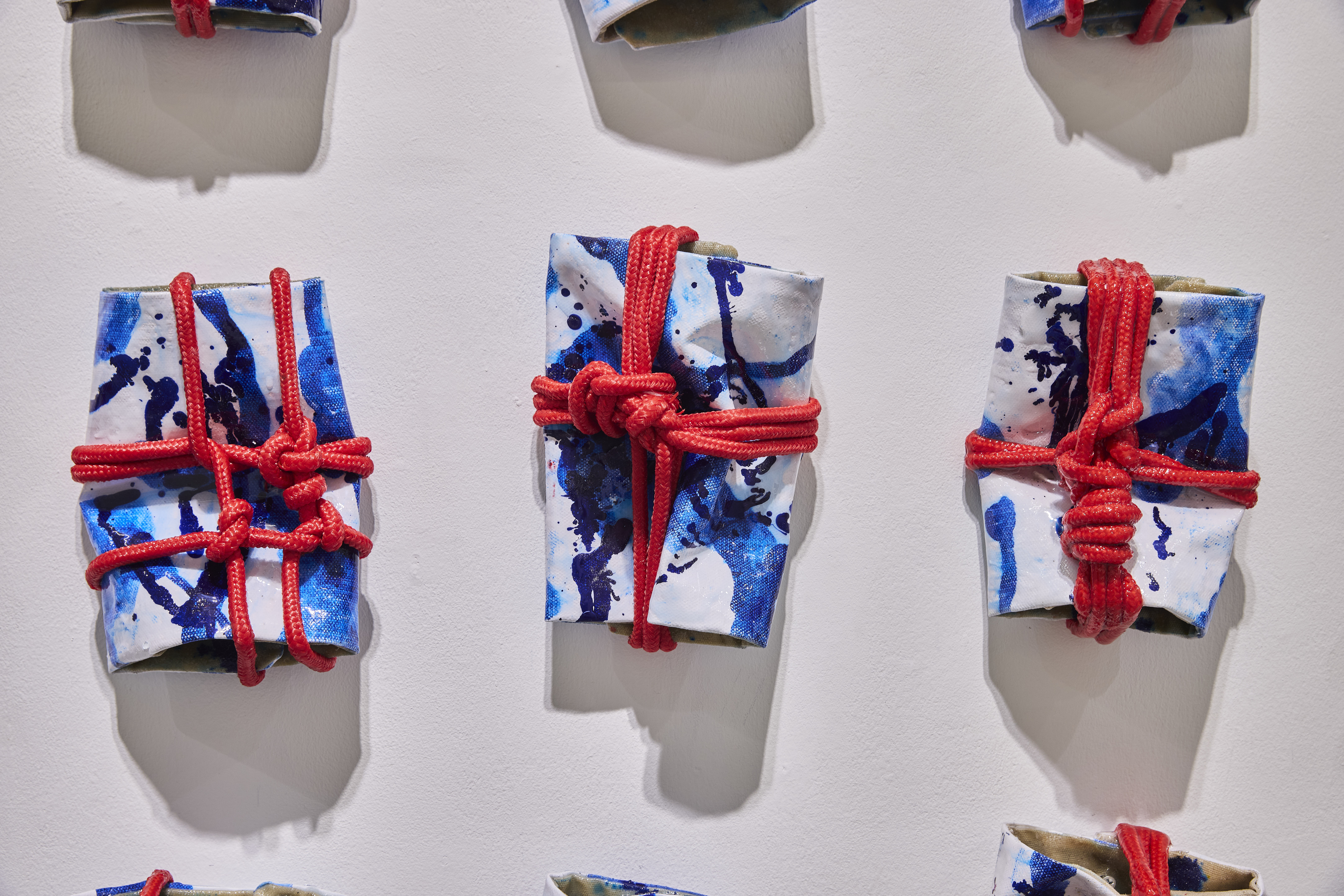
Exhibition view of Seseletan #4, 2025 at Mizuma Gallery Singapore, 2025. Photography by Wong Jing Wei, courtesy of Mizuma Gallery.
Mizuma Gallery: In recent years, your paintings have begun to incorporate more sculptural, three-dimensional elements, from raised surfaces to folded canvases cast in resin. What inspired this exploration, and what have you been discovering through the process?
Kemalezedine: This body of work draws inspiration from rerajahan, a Balinese ritual involving spiritual drawings used for healing and protection. These drawings are typically inscribed on various materials, such as paper, cloth, wood, or metal, and activated through a mantra. Once incanted, the rerajahan is folded, tied and given for safekeeping. They are often worn or carried close to the body, whether in a belt, necklace, or over the heart. As long as the object remains folded and properly stored, the mantra’s power is believed to remain active and effective.
This act of keeping spiritually charged objects is known as seseletan, and I see in it an aesthetic language that can be translated into visual form. My work explores this ritual process of drawing, folding, tying, and storing, and reflects it through material gestures: painted or dyed canvases that are folded, tied, and then preserved, or “frozen.” This approach is part of my broader investigation into how traditional Balinese ritual practices can inform contemporary artmaking. In Bali, art is inseparable from ritual, and through this work, I’m exploring that intersection in a new, contemporary context.
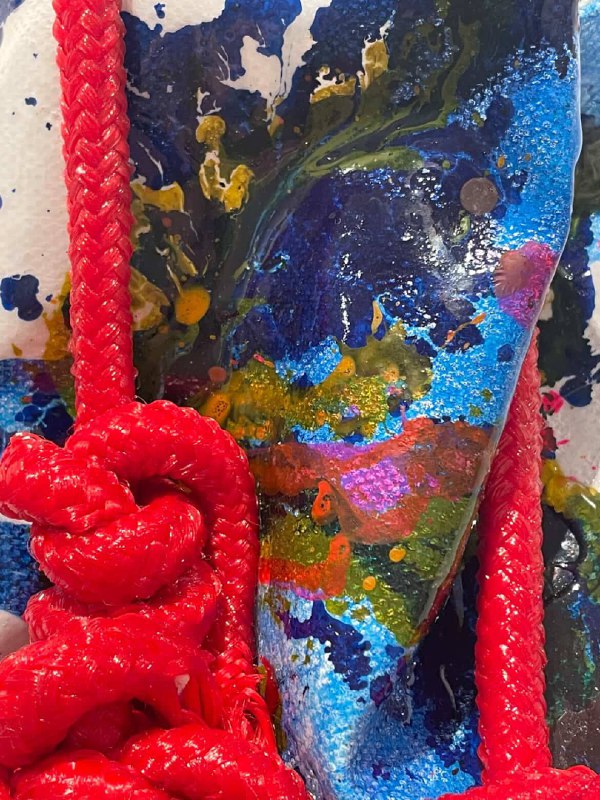
Detail view of “Seseletan #4”, Image courtesy of Mizuma Gallery.
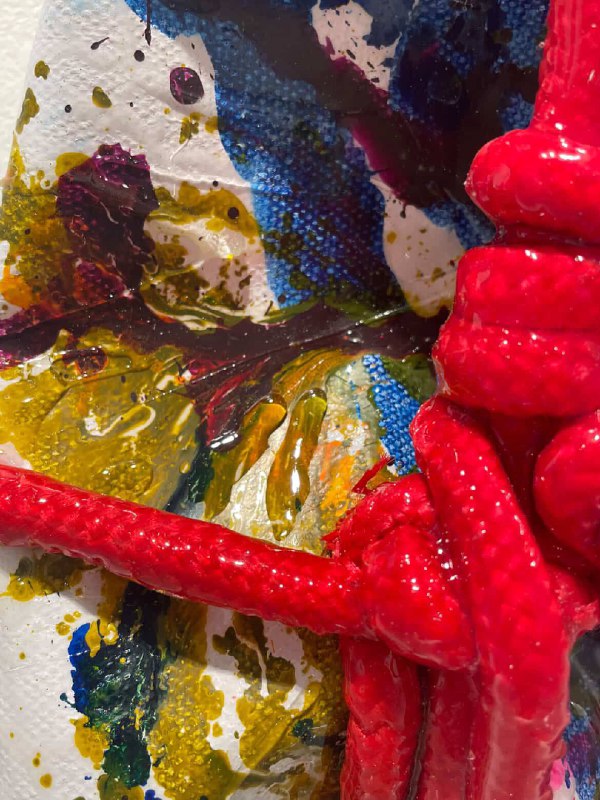
Detail view of “Seseletan #4”, Image courtesy of Mizuma Gallery.
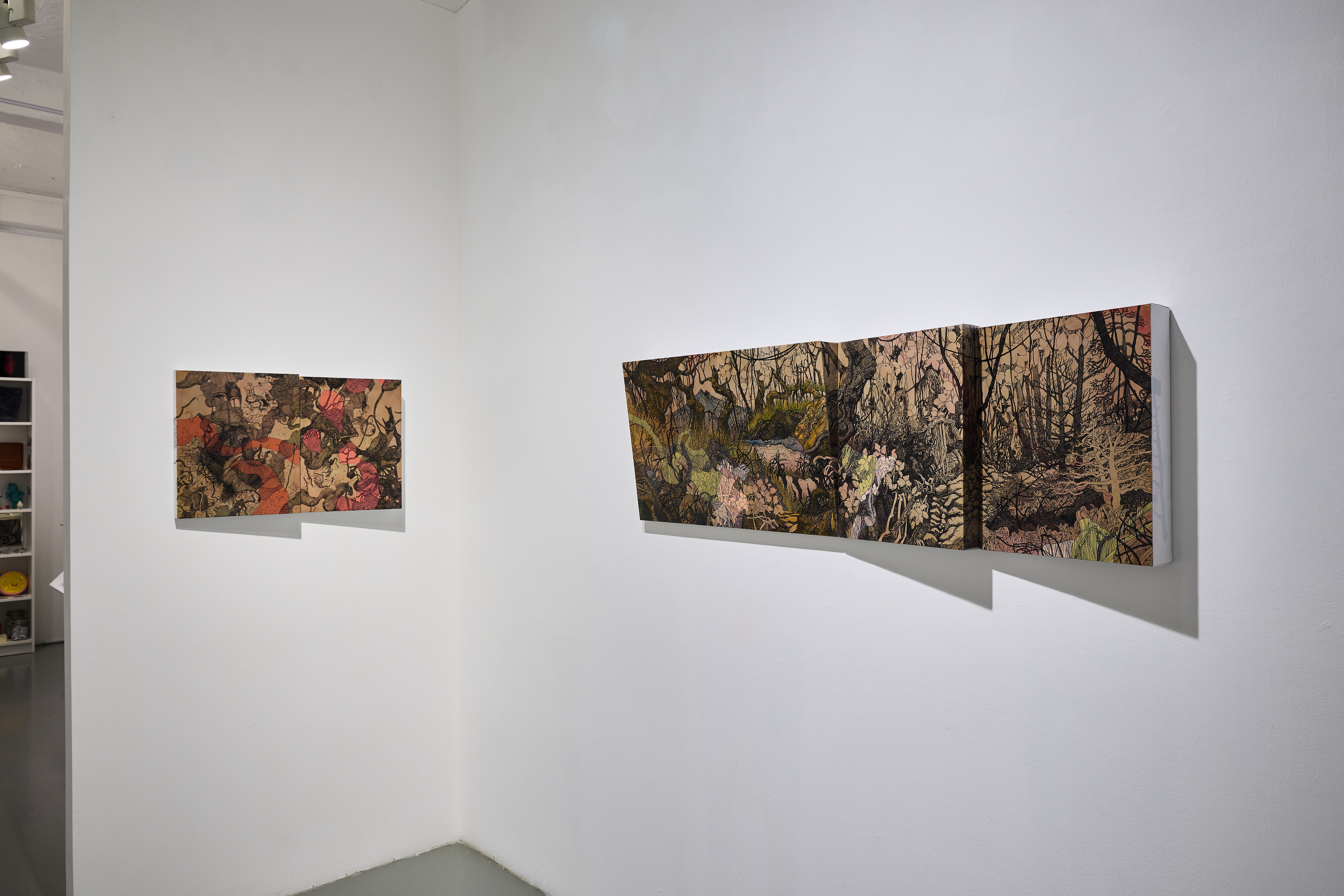
Exhibition view of ‘Kemalezedine; Epigraphic Landscape of Balinese Painting’ at Mizuma Gallery Singapore, 2024. Photography by Wong Jing Wei, courtesy of Mizuma Gallery.
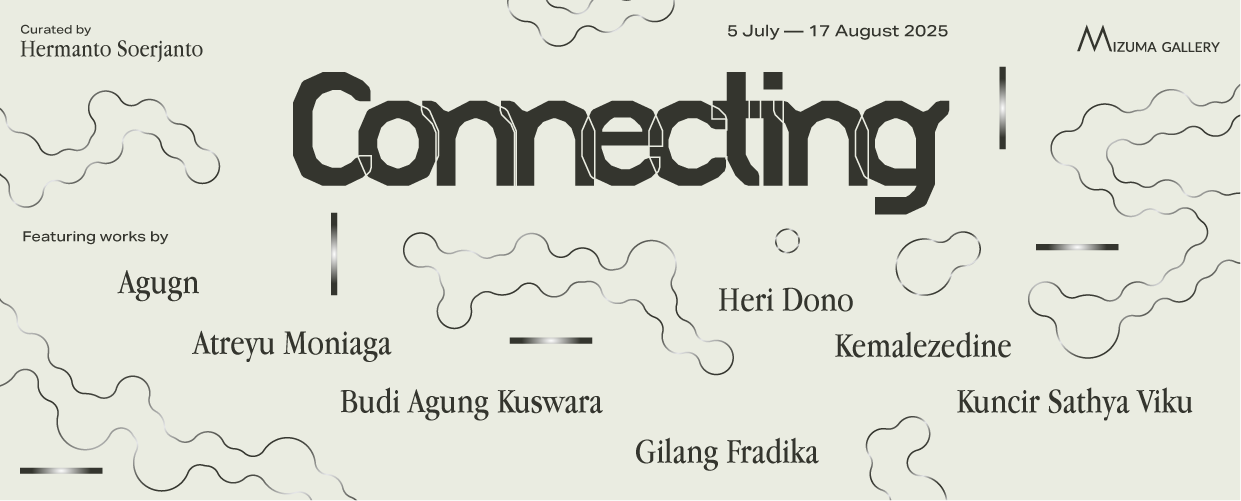
Connecting is a group exhibition that brings together seven contemporary Indonesian artists whose practices explore the many ways connection can emerge between people, ideas, materials, and environments. Curated by Hermanto Soerjanto, the exhibition reflects on the notion that connection is fundamental to all life, shaping our sense of purpose and grounding our presence in the world. The exhibition runs from 5 July to 17 August 2025 at Mizuma Gallery Singapore.
About the Artist
Kemalezedine (b. 1978, Yogyakarta, Indonesia) studied at the Faculty of Fine Arts and Design at Bandung Institute of Technology (ITB), Bandung, Indonesia from 1997 to 2004. He is part of the Nu-Abstract and Neo-Pitamaha groups in Bali, who study traditional Balinese art, while incorporating new experimentations and ideas. Kemalezedine’s focus is to create and explore the world of painting-drawing. His paintings intertwine the genealogies of both traditional art lines and modern painting through colour planes, composition, and balance. Existing between different painting styles, his paintings explore the tension between the traditional and the modern, natural and unnatural, macrocosm and microcosm, emptiness and fullness. Kemalezedine lives and works in Bali, Indonesia.
—
This interview took place between Mizuma Gallery and Kemalezedine in August 2025.
Copyright and Image Credits:
© Kemalezedine, image courtesy of the artist and Mizuma Gallery



