
Mizuma Gallery is pleased to announce our representation of Indonesian artist, I Nyoman Arisana.
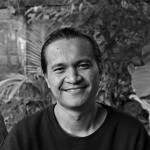
I Nyoman Arisana (b. 1989, Bali, Indonesia) came from a family of artists in Banjar Dauh Uma, Bitera, Gianyar, Bali. His grandfather is a painter, and his father is a wood carver and maker of barong masks. Since he was ten years old, he began studying traditional Balinese painting, creating works that depicted wayang themes, barong dance, traditional markets, and everyday lives of the Balinese people. In 2008, Arisana graduated from the Art Education programme of Universitas Pendidikan Ganesha (UNDIKSHA), Singaraja, Bali, and has since been actively participating in exhibitions. In 2017, Arisana was awarded the Titian Prize organised by Yayasan Titian Bali, and became one of the finalists of UOB Painting of the Year. I Nyoman Arisana lives and works in Bali, Indonesia.
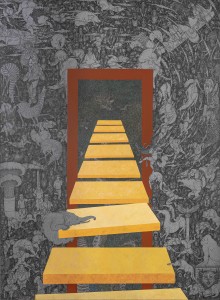
I Nyoman Arisana, Jalan dan Gerbang Rindu (The Road to the Gate of Longing), 2025, ink, acrylic on canvas, 150 × 110 × 4.5 cm © I Nyoman Arisana, courtesy of the artist and Mizuma Gallery
“ In my creative process, I am greatly inspired by the Balinese way of life, including my personal experiences as part of that community. Bali is known for its strong customs and culture, which are consistently maintained in a spirit of steadfastness amidst the challenges and increasingly intense currents of modernization… Experience and observation of these conditions serve as an important foundation for my creative process, both as a reflection and as an effort to convey ideas through art.”
– I Nyoman Arisana
Mizuma Gallery (MG): When did you first start making artworks?
I Nyoman Arisana (Arisana): I began making works at the age of 12, coming from a family with a strong connection to the arts. My grandfather was a painter, and my father is a wood carver. This family environment indirectly influenced my growing interest and fascination with the visual arts.
I was born in Banjar Dauh Uma, Bitra Village in the Gianyar District of Bali. In the 1990s, this area was known for its home industry, producing various works of art, particularly eggshell paintings, such as those of duck, goose, cassowary, and ostrich eggs, using traditional Balinese art techniques. This creative environment enriched my visual experience and my learning process, deepening my understanding of visual art practices.
From this family background and environment, I began to learn, study, and continuously develop my skills in the visual arts.
MG: How did that lead you to become an artist?
Arisana: A deepening interest in the world of visual arts. In 2008, I continued my education at Ganesha University of Education, majoring in Fine Arts Education. At this institution, I studied various aspects of fine art, both theoretically and practically.
My studies included an understanding of the history and development of fine art, from both Western and Eastern traditions, including various schools of thought within traditional, modern, and contemporary contexts. Furthermore, I understand that fine art continues to evolve as a medium that provides space for artists to express and express ideas and concepts.
Through this process, artwork becomes not only a visual form, but also a means to convey questions and statements that can be presented to the public in a broader context.
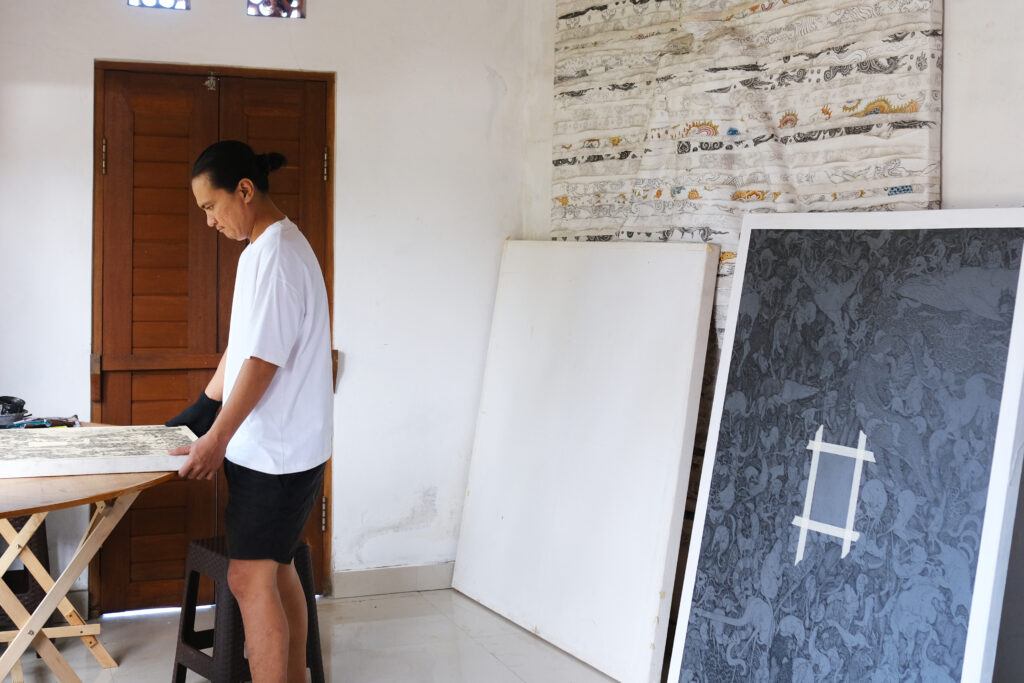
I Nyoman Arisana working in his studio. Image courtesy of the artist.
MG: Can you share with us what currently inspires your work?
Arisana: In my creative process, I am greatly inspired by the Balinese way of life, including my personal experiences as part of that community. Bali is known for its strong customs and culture, which are consistently maintained in a spirit of steadfastness amidst the challenges and increasingly intense currents of modernization.
This situation presents its own dynamics, while also presenting a challenge in maintaining a balance between these two divergent currents. On the one hand, Bali exhibits a unique cultural strength, particularly in its social life, which upholds the value of mutual cooperation (gotong royong), as seen in the communal performance of traditional ceremonies. The values of togetherness and mutual assistance have been an integral part of Balinese life throughout history.
However, on the other hand, society is also faced with a capitalist economic system. This creates a paradox, where communal and collective social life coexists with the individual demands of the modern economic system. Without realizing it, society lives in an increasingly dynamic, dense, and hectic rhythm, with increasingly limited space for respite.
Experience and observation of these conditions serve as an important foundation for my creative process, both as a reflection and as an effort to convey ideas through art.
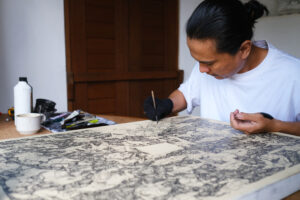
I Nyoman Arisana working in his studio. Image courtesy of the artist.
MG: What do you find most challenging when you make artworks?
Arisana: One of the main challenges in the creative process lies in the technical aspects. In my work, I use traditional Balinese painting techniques, utilizing bamboo brushes as the primary tool for shading and determining the gradations of light and dark on objects.
Visually, the objects I present tend to be imaginative. This presents its own challenges, particularly in composing compositions, determining perspective, and processing the anatomical movement of objects. The resulting forms are often distorted and do not fully adhere to the principles of realism. Nevertheless, I strive to maintain a visual balance that is pleasing to the eye.
My works generally don’t depict a single object, but rather consist of various elements with varying movements that fill the canvas. Different canvas sizes also present varying levels of complexity and challenges in the process.
Furthermore, consistency of line and detail is crucial. Visually, the quality of detail is clearly visible, so the process of creating each element must be carried out to the maximum. Accuracy in processing details is a crucial determinant in building the visual strength of the overall work.
MG: How does the Balinese way of life influence your artistic process?
Arisana: The Balinese lifestyle has a significant influence on my artistic process, although it is often unconscious. In developing concepts, I frequently refer to the values entrenched in Balinese society, one of which is the concept of Tri Hita Karana.
Conceptually, Tri Hita Karana is defined as the three elements that contribute to harmony: the relationship between humans and God, the relationship between humans and other humans, and the relationship between humans and the universe and its contents. These values serve as an important foundation that I frequently reflect on in my artwork.
However, in my observation, this concept often shifts in everyday life, especially amidst the dynamics of today’s urban Balinese lifestyle. Changes influenced by modernization and the capitalist economic system raise various critical questions, which then become part of my reflection and exploration in my creative process.
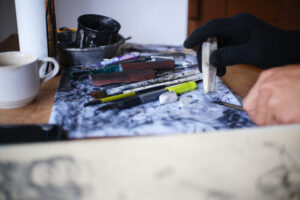
I Nyoman Arisana works primarily with ink, along with other tools. Image courtesy of the artist.
MG: What are you currently working on and do you have any exhibition plans in the future?
Arisana: What I am doing now is trying to work and create works of art as much as possible and convey messages and criticism to a wide audience and together question and express something in any expression, and keep moving.



